I’ve tested every shortcut to stop buttercream from sliding off warm cakes.
Slice your cake into two or three horizontal layers first. This doubles your surface area so each piece cools in about fifteen minutes instead of an hour.
Rest the whole cake ten minutes, then vent it on a wire rack so steam escapes upward instead of trapping moisture in your crumb.
For a speed boost, wrap it tight and fridge-cool for thirty minutes, but keep it away from garlic leftovers.
Skip the freezer unless you’re desperate; it’ll dry your cake out in under an hour.
Wait until everything’s fully cool, about two to three hours, before you frost it.
Each of these methods has specific advantages that will improve your baking results.
Speed Up Cooling by Slicing Into Layers First
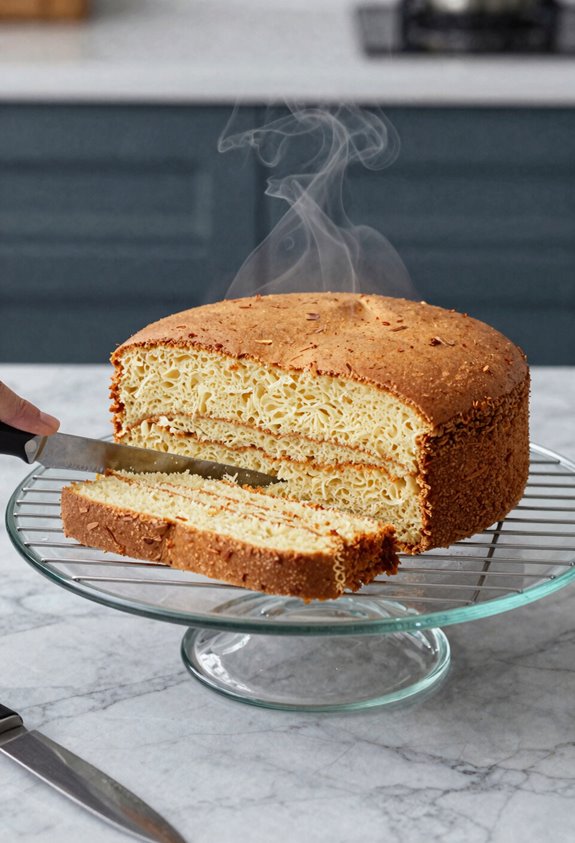
Why wait around when you can slice your way to a cooler cake. I slice into layers when I’m impatient, and it works effectively. More surface area means heat escapes faster; it’s simple physics. I cut my cake into two or three horizontal layers, pop them on a wire rack, and let air circulate all around. Each piece cools in maybe fifteen minutes instead of an hour. If you’re adding filling, slightly warm layers actually help it set quicker, though I learned the hard way not to rush too much. Crumbly cake is undesirable. Just don’t stack them back together until they’re fully cool, or you’ll trap steam and get soggy spots. For extra speed, I’ll slide those layers into the fridge, uncovered or just lightly wrapped.

Healthy & Heavy Duty: TeamFar cooling racks are made of premium stainless steel, No toxic coating or harmful substance release into your food at high temperatures, Rust and corrosion resistance, Healthy and sturdy for your daily baking, A great replacement to aluminum or nonstick wire rack

Baking cooling rack made of heavy weight metal wire with non-stick coating, not rust.

STURDY STAINLESS STEEL CONSTRUCTION: Our baking cooling rack is made of quality materials, prevents bending or deformation when carrying heavy loads. Smooth polished surface of cookie cooling rack without coating or plating, no burrs, no rust, no peeling, protect your daily food safety
Vent Steam on a Wire Rack Before Chilling
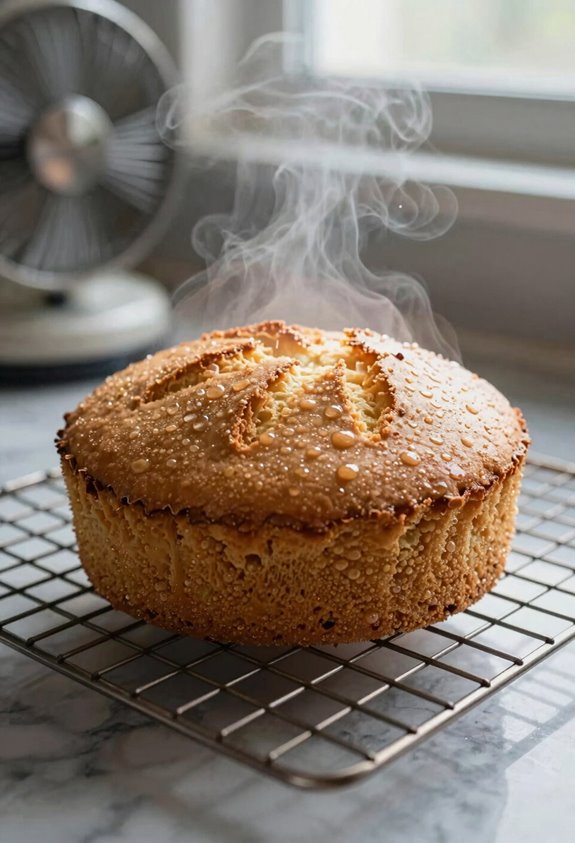
Slicing layers works great, but sometimes I want to cool a whole cake without cutting it apart. That’s when I grab my trusty wire rack to vent steam before chilling.
I let my cake rest for about 10 minutes first so it doesn’t fall apart. Then I place the pan on a sturdy rack, making sure air can get underneath and all around. The hot moisture escapes upward instead of getting trapped, which keeps my crumb from turning gummy. A sad, dense texture results from trapped steam and condensation.
Let your cake rest, then set it on a rack—trapped steam is the enemy of a fluffy crumb.
I usually slide a tray underneath to catch drips, learned that one the hard way.
This step actually speeds up my whole cooling process because I’m not fighting condensation later. Whether I’m heading to room temperature or the freezer, starting with proper venting means my cake stays fluffy and ready for frosting.

【Essential Cake Decorating Tool】11 inch in diameter cake turntable. Display your creations like a Pro! Simple and stylish. Multi-functional and easy to clean. Made for left or right handed bakers of all ages and skill!

Essential Cake Decorating Supplies Kit: This baking supplies has everything you need to create beautiful cakes, including 2 frosting spatulas, 3 scrapers, and an easy-to-use cake turntable. No need to buy extra products — all you need is the frosting, the cake, and this cake decorating kit!
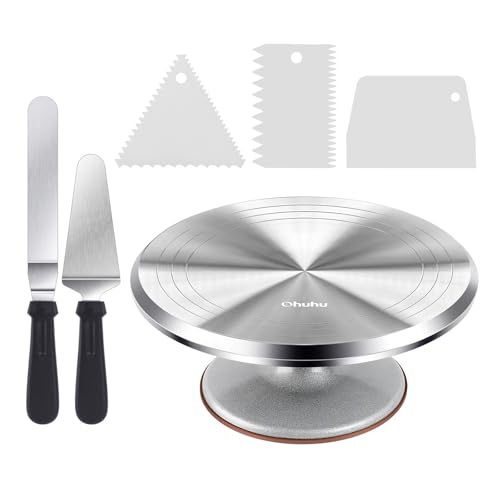
HEAVY DUTY CAKE TURNTABLE: Stay safe while you eat, with a product that lasts. Made from heavy-duty aluminum, this cake stand will last through countless events. Plus, the anti-slip surface on top makes sure the cake stays in place when you're decorating, carrying or cutting it!
Fridge Cool for 30 Minutes: With These Odor Guards
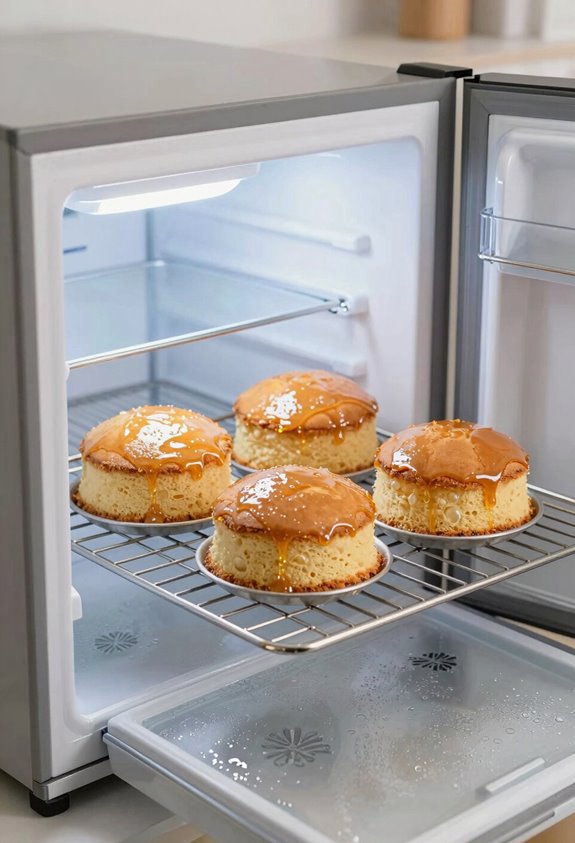
When I’m racing against the clock, like that midnight birthday cake disaster last month, the fridge becomes my covert edge. Thirty minutes of cooling works magic for setting that crumb coat.
I’ve learned the hard way that fridges can betray you. That leftover garlic pasta will transfer its smell to your cake. I always wrap mine tight with plastic wrap and keep it on a wire rack, not shoved against last week’s takeout.
Airflow matters significantly. A container with breathing room, or just that rack, stops moisture from turning your masterpiece soggy. Short bursts work best: half an hour, maybe forty-five if I’m pushing it. This is about time management, not deep freeze therapy.
Unwrapped cake will dry out and absorb surrounding odors. Monitor that exposure carefully.

Plastic Food Wrap: Add our plastic food wrap to your household items to extend food freshness with a tight seal

PRESS'N SEAL PLASTIC FOOD WRAP: With a quick press and glide, this food wrap keeps food fresh with a leak proof, air tight seal making it the ultimate storage solution; packaging may vary

【 Complete Cake Display Set 】 This 5-piece combo pack includes five 10" black trays, five clear high dome lids, and five 10" corrugated white cake boards, providing everything you need to elegantly showcase your delicious cakes.
Why Freezer Cooling Risks Dry, Crumbly Cake
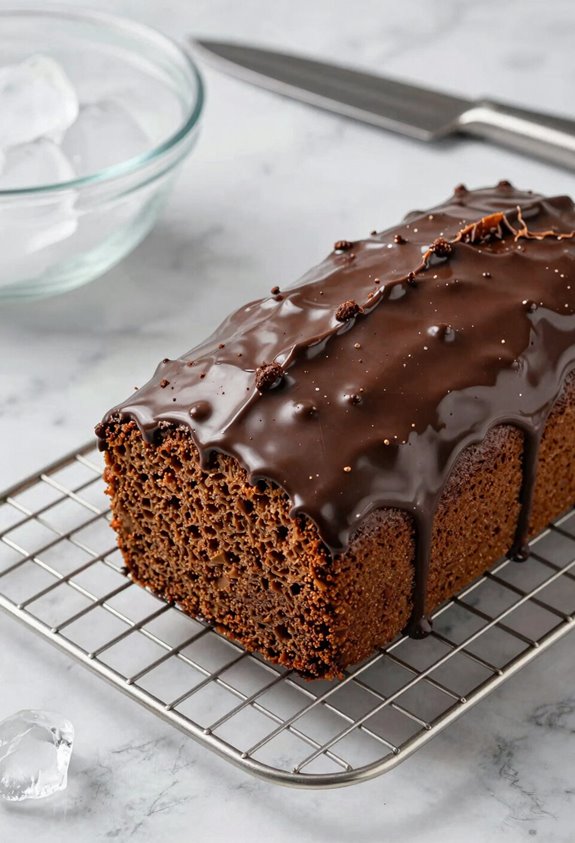
How tempting is it to just shove that cake straight into the freezer and call it done? I’ve been there.
Freezer cooling can wreck your cake fast. Without proper wrapping, dry air sucks out moisture, leaving you with something crumbly and sad. The fridge or freezer both pose this risk, though the freezer hits harder with its temperature shock. Unwrapped cakes develop freezer burn in under an hour, and that texture cannot be fixed.
Air exposure is the real enemy here. Your cake absorbs weird odors too, which nobody wants at their party. If you’re rushing, that’s fine. We’ve all got deadlines. But wrap that cake tight first. Airtight container, double plastic wrap, whatever you’ve got. Protect your work, or you’ll regret it later.
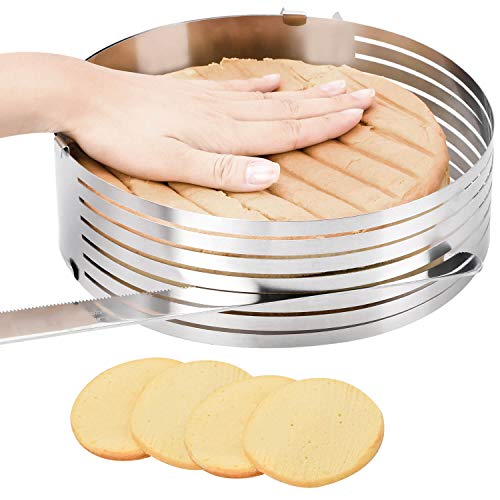
【Food-Grade】- Made of full 430 stainless steel, Oranlife Cake Leveler is thicker and more stable !! Reusable, Easy to clean, High temperature resistant and Corrosion free

Precise Cake Leveling: The Wilton Adjustable Cake Leveler is a classic cake trimming tool that uses a sturdy slicing wire for smooth, even cuts

BAKE & DECORATE LIKE A PRO: Our Cake Baking Strips are made of Aluminized Cotton to conduct heat evenly, so layers come out moist, even and ready to ice; say goodbye to cracking and doming; level layers mean bakery-grade cakes can be made at home
Know When Your Cake Is Actually Ready to Frost
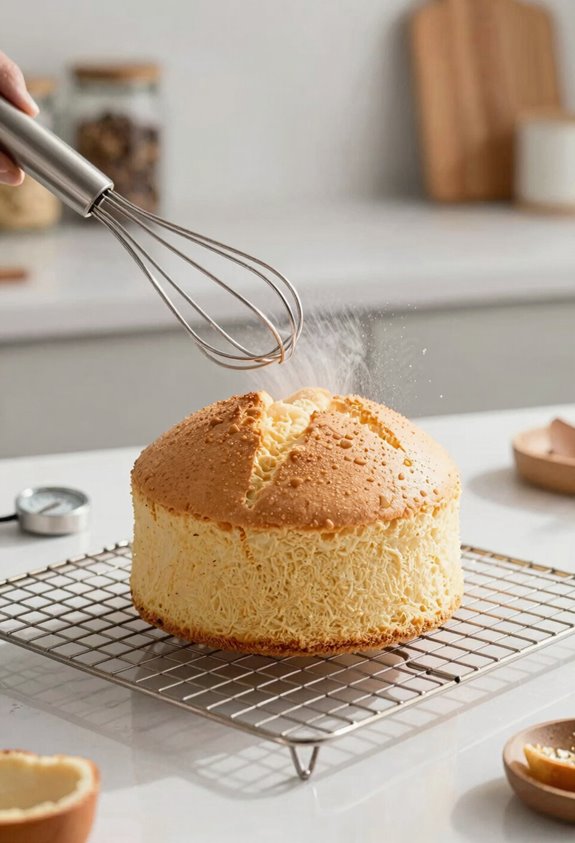
The trickiest part of cake decorating isn’t the piping or the fondant: it’s knowing when that cake is actually cool enough to frost. You really need to let it cool completely, about two to three hours, before that first crumb coat. If you’re impatient, pop it out after ten minutes and use a wire rack to speed up the process. Frost too soon and your buttercream turns into a melty mess. The crumbs end up everywhere. After applying your crumb coat, refrigerate for thirty minutes. This sets everything up properly and prevents the frosting from sliding or the crumbs from mixing into your final layer.

Heavy Duty Stainless Steel, Sturdy Construction - Engineered for supreme durability and rust/warp resistance. Provides optimum support and prevents baked goods from slipping through the rack.
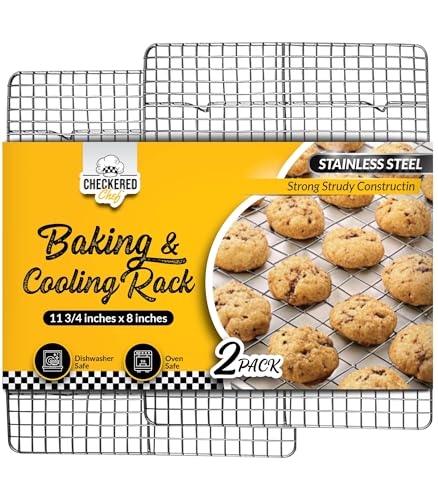
Stainless steel construction: Heavy-gauge stainless steel resists rust and corrosion across years of heavy use; no toxic coatings to flake onto food; safe for roasting, broiling, and everyday cooling tasks at high oven temperatures

🍪PREMIUM STAINLESS STEEL CONSTRUCTION: The cooling rackis made of food-grade stainless steel without metal plating or coating, durable use for many years, less prone to rust, prevent bending or warping when bearing heavy food, Smooth edges without rough spurs to protect your hands. This baking rack serves as a baking companion for daily use while maintaining maximum durability.