I’ve watched too much buttercream slide off warm layers to skip cooling, so here are five tricks I actually use. Start with a wire rack; air hits every side, no soggy bottom.
For cheesecakes, I turn the oven off, crack the door, and let it rest an hour. Gradual cooling is gentler on the structure.
Need fast results? Refrigerate for 20-30 minutes after a quick rack rest, wrapped loosely so it won’t dry out.
In a hurry? Pop the pan in the freezer for 15 minutes. This works effectively.
Or set a fan nearby, not blasting, for quick room-temperature cooling. Each method serves a specific purpose depending on your timeline and cake type.
Start With a Wire Rack: The Baseline Cooling Method
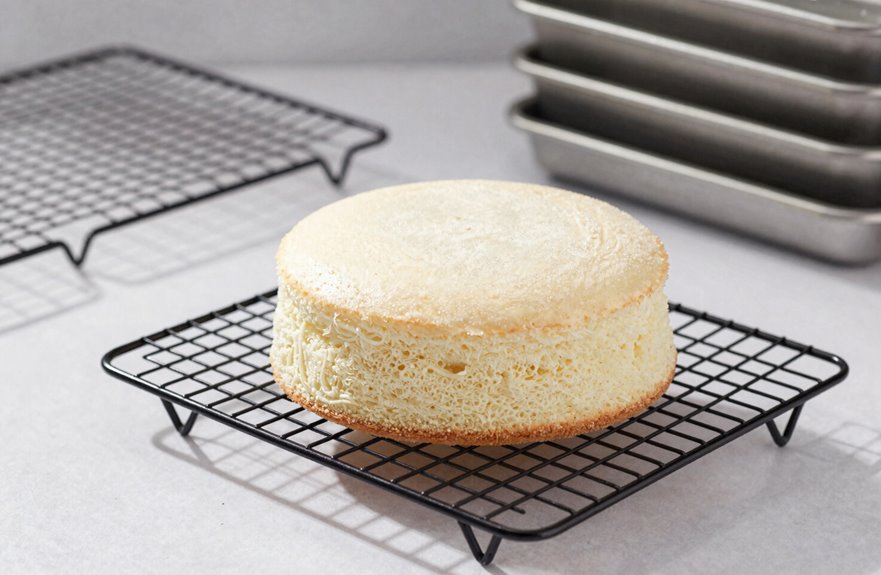
Why do so many cakes end up soggy on the bottom? I’ve been there, staring at a beautiful cake ruined by trapped steam. The solution is simple: start with a wire rack.
Remove the cake from its pan and place it right on that rack, letting air hit every side. This elevates the cake and stops moisture from pooling underneath. No more wet bottoms. The cooling happens faster too, since air circulates all around, bringing the cake down to room temperature evenly.
Make sure your rack sits level. Learn from my near-disaster and get this detail right. Then wait, letting it cool completely before even thinking about icing. This baseline method works.

QUALITY STAINLESS STEEL CONSTRUCTION: Made from food grade stainless steel instead of metal plating or coating, the grill is stronger, more durable, less likely to rust, warp or bend and safer
Stainless steel construction: Heavy-gauge stainless steel resists rust and corrosion across years of heavy use; no toxic coatings to flake onto food; safe for roasting, broiling, and everyday cooling tasks at high oven temperatures

𝟏,【𝐏𝐑𝐄𝐌𝐈𝐔𝐌 𝐐𝐔𝐀𝐋𝐈𝐓𝐘】The cooling rack is composed entirely of stainless steel without any harmful coatings. To meet your baking needs, we have chosen for you the substantial material on the market: food-grade stainless steel.
When Slower Cooling Wins: Cheesecakes and Delicate Cakes
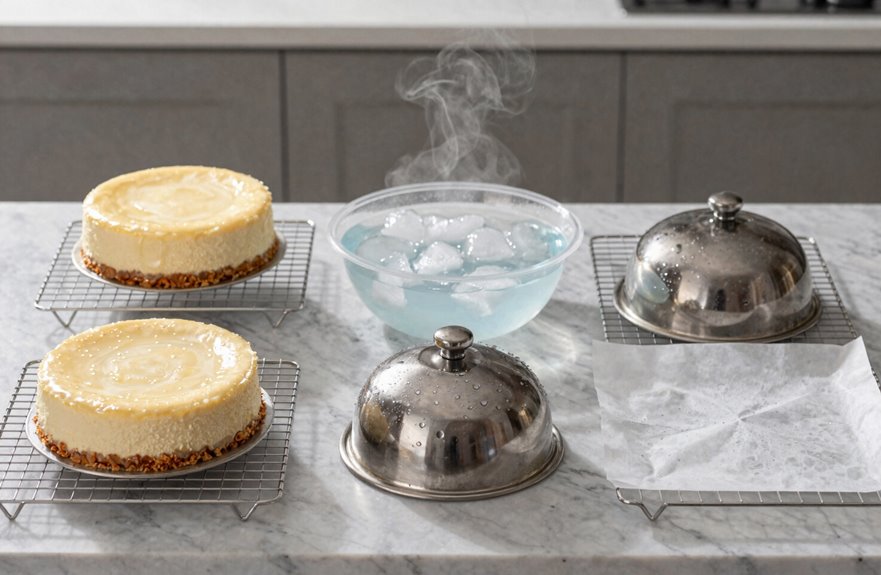
Not every cake wants to be rushed. I’ve learned this the hard way with cheesecakes; that cracked surface tells a sad story. Gradual cooling isn’t just fancy talk; it’s how we protect delicate cakes from collapsing or cracking.
Here’s what I do now. I turn off the oven, crack the door slightly, and let my cheesecake rest inside for about an hour. This stepwise approach—oven first, then rack, then eventually fridge—prevents that shocking temperature drop that ruins texture. I cover it loosely too, keeping moisture in and weird fridge smells out.
Some cakes need to cool completely at room temperature before any cold air touches them. If you’re in a hurry, resist the freezer blast. Gentle, patient steps win every time with these fragile beauties.

Perfect Fit & Extra Long: Customizable Size for Any Pan. Never struggle with mismatched liners again. Our 2.75" x 164ft parchment paper roll offers maximum flexibility, allowing you to cut the exact length needed for round, square, or springform pans. One roll provides enough cake pan side liners for hundreds of baking sessions, ensuring a professional edge for every cake.

EXTRA STRONG - 200pcs 9 inch parchment paper rounds made of extra thicker 45gsm paper, compared with commonly used 35gsm or 40gsm paper, it's about 12% thicker than others'. We define it as heavy duty parchment paper rounds. Katbite 9" round patty paper won’t curl or burn.

NON-STICK PARCHMENT PAPER ROUNDS: Regency greaseproof parchment paper circles are premium non-stick cooking and baking liners that make removal from the pan easy, leaving you with almost no clean-up.
Cool Cakes Faster in the Fridge (Without Drying Out)
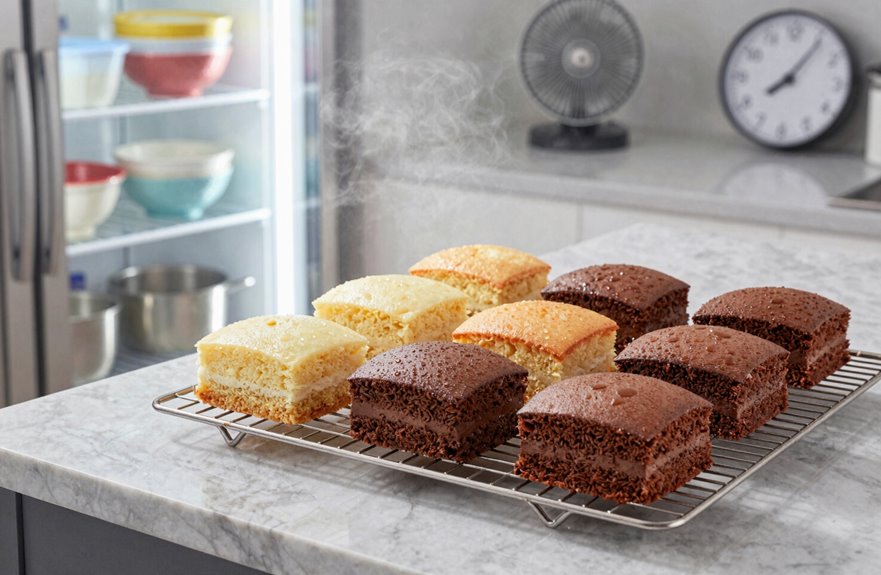
The fridge can be your best friend when you’re racing against the clock, but I’ve definitely pulled out a dry, sad cake more times than I’d like to admit. Understanding how to cool cakes in the fridge effectively makes a real difference.
First, start with rack cooling for about 10 to 15 minutes in the pan, then move your cake to a wire rack. This is when the fridge cooling process begins. To cool cake fast without drying it out, wrap it loosely with parchment or a clean kitchen towel. Not tight, not plastic. Just a gentle cover that lets it breathe while keeping moisture locked in.
Twenty to thirty minutes in the fridge will cool the cake properly. Pull it out when it’s cool to the touch, then frost away. Keep garlic leftovers and other strongly scented foods away from the cake during cooling, as they can transfer odors.

Cookeez Makery will amaze you and your child when they create a surprise plush.

Quick Cooling: The refrigerated display case features a Turbo fan cooling system, capable of rapidly cooling down to the set temperature (temperature range: 36-46°F / 2-8°C, inner central area) and maintaining the internal temperature within the designated range. It is energy-efficient, consuming as low as 3.79 kW.h/24h, ensuring your food stays in optimal condition
[2-IN-1 CUTTER & KEEPER] Simplify your kitchen routine with this innovative butter dish that cuts and stores butter in one place. No more greasy countertops, messy butter wrappers, or extra knives and cutting boards to wash—just press down to get clean slices, then pop the lid on and store.
Cool Cakes Fast: The 15-Minute Freezer Method
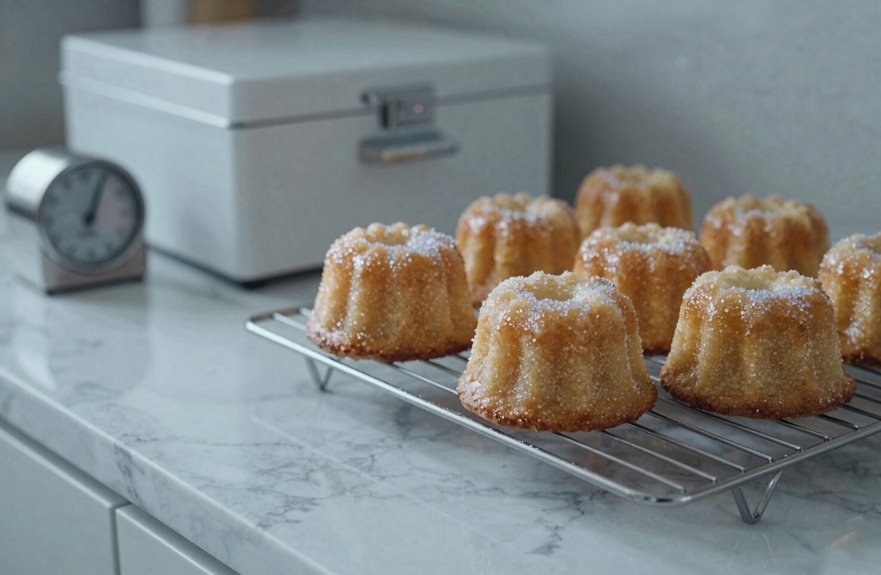
Sometimes the fridge just isn’t fast enough when you’re working with a tight timeline. When I need to cool a cake quickly, I use my freezer instead. Here’s how the process works. I let my cake rest in its pan for about 15 minutes first, which sets any cracks, so don’t skip it. Then I pop the whole thing, pan and all, into the freezer for another 15 minutes. To keep things moist, I place plastic wrap over the top before that second chill. Sometimes I’ll unwrap the cake entirely and wrap it in plastic instead; either way works. This rapid cooling significantly reduces cooling time without drying out the cake. This method works consistently every single time.

WINE CHILLERS FOR BOTTLES | This flexible wine chiller sleeve works as a white wine chiller and uses cooling gel to chill wine in about 15 minutes after 6 hours in the freezer.

High Productivity: Capable of producing up to 10L/10.6 Qt of ice cream per hour, this commercial desktop ice cream machine runs efficiently within ambient temperatures (5 to 32°C / 41 to 89.6°F). It consistently delivers 4 to 6 servings (80g each) per batch without interruption
Use a Fan to Cool Cakes Quickly at Room Temperature
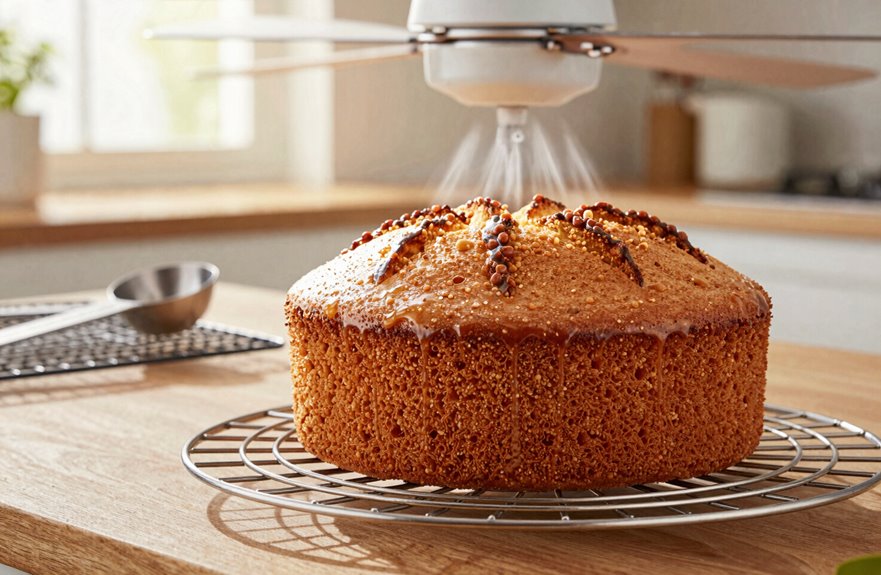
A gentle breeze from a fan can work wonders when racing against the clock. Increased airflow is the key to making room temperature cake cooling surprisingly speedy.
Start with a 10-15 minute rest in the pan to let the structure set, then transfer the cake to a wire rack. The gap underneath the rack is essential. Air circulates on all sides, top and bottom, so no soggy spots develop. Position the fan nearby, but not blasting directly on the cake, since that can crack the crust. Keep the cake uncovered. Covering traps moisture, and the goal is to lose heat, not retain it.
If the kitchen temperature is around 68-72°F, this method will work effectively. It saves time when quick cooling is necessary.

STURDY STAINLESS STEEL CONSTRUCTION: Our baking cooling rack is made of quality materials, prevents bending or deformation when carrying heavy loads. Smooth polished surface of cookie cooling rack without coating or plating, no burrs, no rust, no peeling, protect your daily food safety

Heavy Duty Stainless Steel, Sturdy Construction - Engineered for supreme durability and rust/warp resistance. Provides optimum support and prevents baked goods from slipping through the rack.

Healthy & Heavy Duty: TeamFar cooling racks are made of premium stainless steel, No toxic coating or harmful substance release into your food at high temperatures, Rust and corrosion resistance, Healthy and sturdy for your daily baking, A great replacement to aluminum or nonstick wire rack