A hanging cake is a multi-tiered dessert that floats in midair, suspended from above by a stainless steel framework rather than sitting on a table. These gravity-defying centerpieces appear at weddings with four or more tiers floating upside down or at wild angles like edible chandeliers. The secret is an internal skeleton of threaded rods and anchor points that carries each tier’s weight independently, turning your dessert into genuine entertainment.
The mechanics of how they hang without crashing and the cost to execute this type of edible engineering reveal the sophistication required for such installations.
What Exactly Is a Hanging Cake?
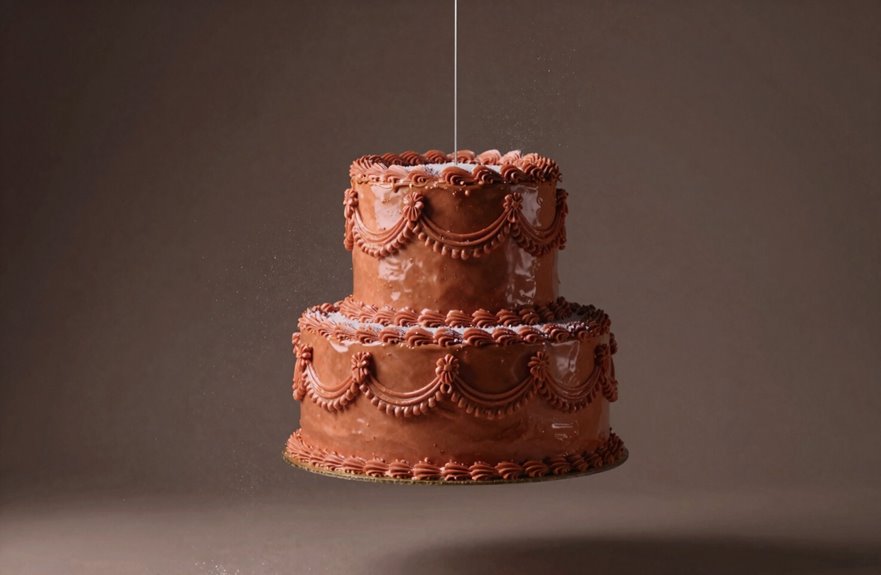
So, what exactly is a hanging cake? It’s a multi-tier cake that floats in midair, suspended from a hanging stand rather than sitting on a table like your grandma’s classic setup. The first time most people see one, they find it visually striking.
The magic happens through a cake frame, usually built with stainless steel supports that carry each tier individually. This lets the whole thing hang upside down or at angles that seem to defy gravity. Most setups handle four or more tiers, which requires careful planning but is achievable.
You’ll need a specialized hanging stand designed for balance and safety, since structural failure during an event is a serious concern. Vendors often help with setup and takedown, plus they’ll walk you through cutting it safely. It’s dramatic, memorable, and manageable once you understand the mechanics.

Stainless steel - Provides durable and corrosion-resistant support

4-Tier Display Stand: Our cake stand is meticulously crafted with 23 compartments, perfect for presenting cupcakes, cheese, candies, and more in an elegant tiered display for parties and family gatherings
How Is a Hanging Cake Different From a Traditional Tiered Cake?
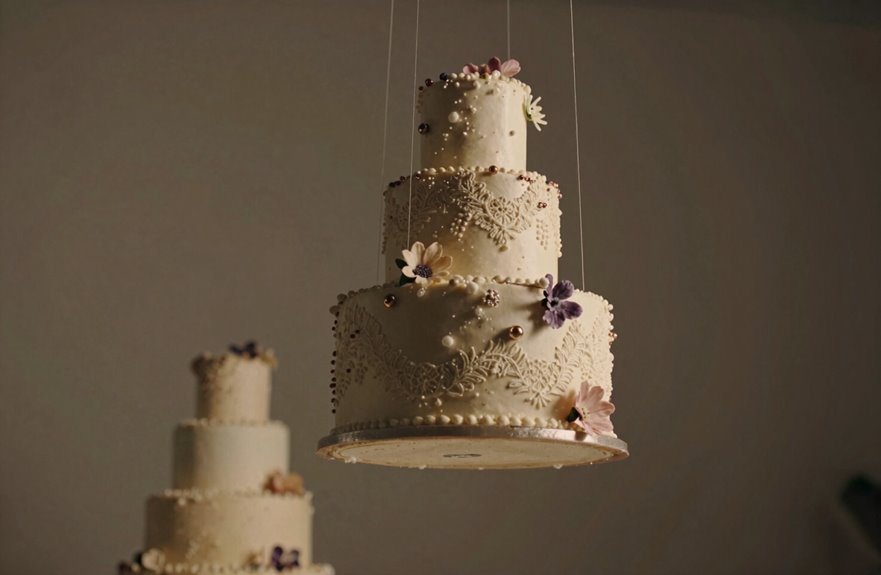
While a classic tiered cake sits on a table, a hanging cake floats suspended from above using stainless steel supports that carry each tier individually. Sometimes they’re upside down, sometimes they swivel, creating a dramatic visual presentation.
A traditional tiered cake relies on a stable base structure. A hanging cake requires a team for installation, especially with chandelier-style designs that demand precise assembly. The visual impact differs significantly; hanging cakes create memorable moments where guests respond with genuine surprise.
Cutting works similarly to traditional cakes, though you’ll need to coordinate with your venue for dismantling. Both styles bring people together at receptions, with the primary difference being that a hanging cake defies gravity while a traditional cake remains grounded on a table.
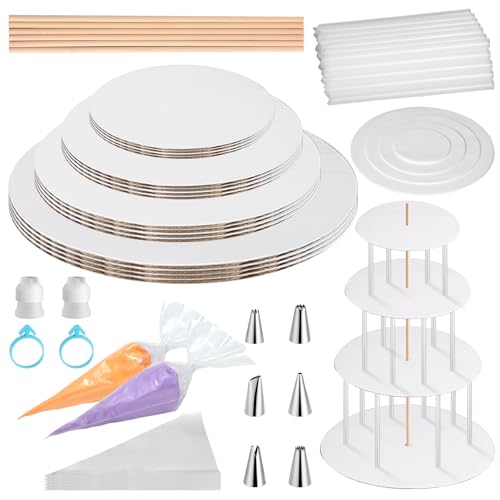
【Cake Stacking Kit】The package includes four sizes of cake boards: 10-inch, 8-inch, 6-inch, and 4-inch, 4 pcs per size. 80 parchment paper rounds, 6 wooden dowels, 50 straw dowels, 100 disposable piping bags, 6 piping tips, 2 couplers, and 2 piping bag ties

Materials: cake plates and cake pins are made of high-quality PP, which is strong and durable enough to support multi-layer cake.
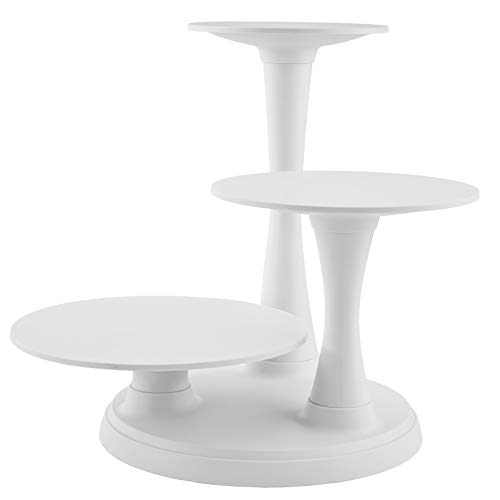
A PARTY ESSENTIAL: Every event is better with sweet treats. Showcase cakes, cupcakes, tarts, cookies and pastries on this beautiful modern style cake stand. Your desserts will stand out at any gathering adding flair and drama to the dessert table
How Does a Hanging Cake Actually Hang?
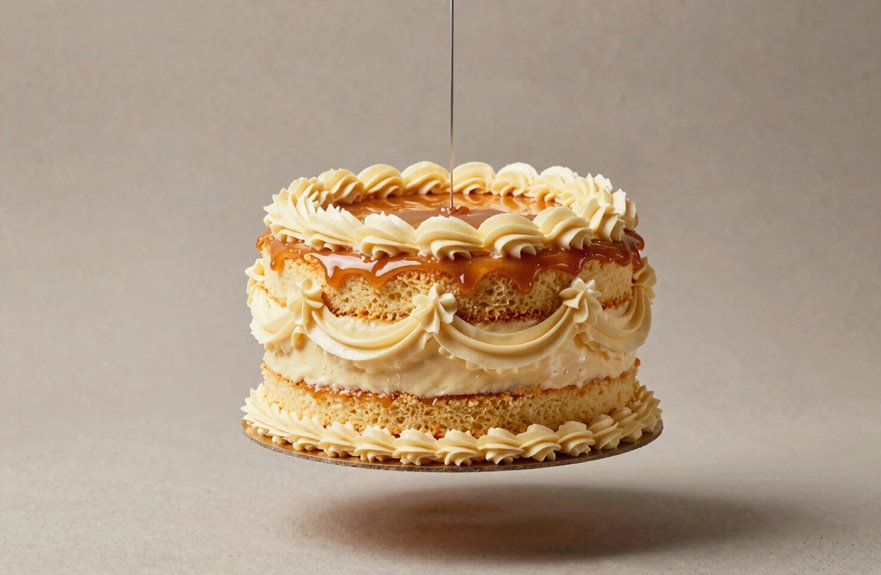
Ever wondered how a cake manages to defy gravity without crashing into your aunt’s centerpiece?
A hanging cake relies on an internal support system, essentially a hidden skeleton made of stainless steel. Each tier connects individually to this framework, so no single layer bears another’s weight. The suspension points, usually threaded hooks or secure fasteners, attach every cake section to a central rod or overhead fixture.
The structure functions similarly to a chandelier. beautiful, balanced, and significantly sturdier than it appears. Your baker coordinates with the venue beforehand, testing everything on-site because nobody wants a cake disaster at 6 PM. Wind, wobbly guests, and other variables are all accounted for in professional planning. You’re not just buying dessert; you’re investing in edible engineering that will impress your guests.

Cake Assembly: Cake plastic support dowels are made easily with these Wilton rods and caps, designed for quick and easy cake assembly. They may also be used with center core rods (sold seperately).

Complete Set: Cake dowels for tiered cakes includes 12 white support rods and 4 cake dividers. This comprehensive kit provides all the necessary tools for creating beautiful multi-layered cakes.

【Heavy-Duty Stainless Steel Material】 Ceiling mount bracket crafted from premium 304 stainless steel, load capacity up to 50LB, provides effective support for wardrobe pipes to prevent bending deformation. (Before installation, determine the ceiling material to prevent loose fastening.)
What Makes a Hanging Cake Structurally Sound?
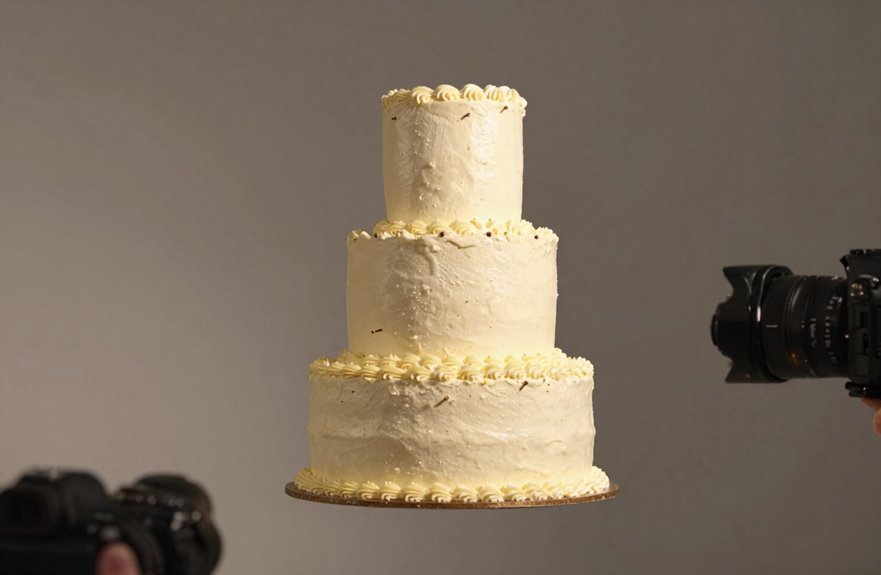
I want you to feel confident about what keeps these gravity-defying creations from crashing down. Nobody wants a cake disaster at their reception. The secret starts with a hidden stainless steel skeleton inside, similar to the bones in your own body. This internal structure holds each tier separately so nothing wobbles where guests can see. The internal framework, smart weight balancing, and rock-solid hanging hardware work together to support the cake, functioning like a tiny, delicious suspension bridge.

Quantity: 1 Cake Stand Material: Metal with Acrylic crystals Color: Silver Overall Height: 8.5" Top Diameter: 14" Top Height: 4.5" Base Diameter: 11" Base Height: 4" Total Acrylic Chains: 36 2 Piece Structure: Base + Top Assembly required: Yes

【Premium Acrylic Construction】: This hanging cake stand is made of durable, high-quality acrylic that resists yellowing, aging, and deformation, ensuring long-lasting use for all your events and celebrations.

Description:60cm Hanging Wedding Cake Rack;Material:Acrylic Or Crystal(Optional);Color: Transparent Color;Size:Diameter 60 * High 46cm;Packing Size: 63*63*8cm;Weight: 4kg/6kg;Rope Length: 2m
Internal Support Framework
How exactly does a cake defy gravity without crashing down on your aunt’s vintage tablecloth? The answer lies in the internal support structure.
Each tier of a hanging cake gets its own stainless steel frame, basically a hidden skeleton that carries the weight so your buttercream doesn’t have to. This functions like a chandelier, but the structure is edible.
What holds it together:
| Component | What It Does |
|---|---|
| Stainless steel rods | Bear the full tier weight, hidden inside |
| Threaded wires | Suspend each layer from above |
| Ganache boards | Create flat, stable platforms |
| Anchor knots | Lock everything tight, no wiggle room |
I practice my knots beforehand to ensure reliability and always bring weighted supports. When guests gasp at that upside-down entrance, the frame carries the full structural load.
Weight Distribution Balance
Once you’ve got that steel skeleton locked in, you need to think about where the weight actually goes. A four-tier cake, even one that looks like it’s floating, is still heavy enough to cause structural failure if it tips.
Your load distribution is critical. Each tier (4″, 6″, 8″, 10″) needs its own anchor point through that stainless steel support system. No single center pole here; we’re talking multiple connection points sharing the burden.
What keeps cakes stable:
- Test your stand height first; clearance prevents disasters
- Map your load paths before adding buttercream
- Secure each tier individually, not as a stack
- Always do a dry run
Stability is engineered through proper support systems and load calculations, not assumption.
Secure Hanging Mechanism
Where does the real magic happen in a hanging cake? The answer lies in the internal support system; that hidden framework makes everything possible.
A secure setup starts with stainless steel rods threading through each tier, carrying weight independently so nothing sags or cracks. Wire runs through the cake, connecting to atrium-style fixtures above, while a sturdy stand or arch anchors the whole display.
| Component | Purpose | My Tip |
|---|---|---|
| Steel rods | Carry tier weight | Check for rust, always |
| Wire threading | Connects to fixtures | Double-knot, no exceptions |
| Weight-tested parts | Prevent collapse | Ask for certification |
| Anchored lines | Stop swaying | Secure to walls or blocks |
| Teamwork plan | Safe lifting | Practice the hoist first |
Stability requires step-by-step dismantling plans. Smaller cakes should be cut on-site, while larger ones require designer assistance to prevent structural failure during removal and transport.
What Equipment Do You Need to Hang a Cake Safely?
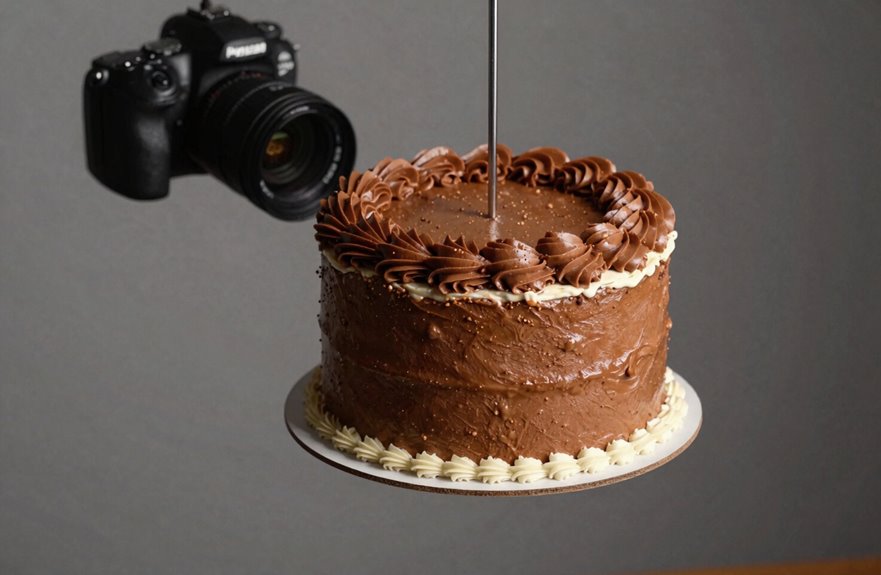
You need a stainless steel support system with threaded rods and individual tier carriers that can bear every pound of cake without buckling, plus a rock-solid stand or frame that won’t wobble when someone bumps the dessert table. I’ve seen setups crash, and now I’m almost obsessive about testing stability with front-and-rear pressure checks before guests arrive.

This hanging cake stand is suitable for wedding dessert table decoration, exhibition hall decoration, wedding flower arrangement, cake display stand, stage props, etc.
【👍60CM Hanging Cake Stand】This product is made of high-quality acrylic, which is strong, non-yellowing, non-aging, and not easy to deform for long-term use.

Practical Cake Turntable: Crafted from food-grade PP material for safety, our cake decorating turntable features an 11-inch diameter, allowing you to effortlessly create exquisite borders or design professional cakes, without worries of elements being added to your food.
Support System Essentials
Precision is everything when you’re suspending dessert in mid-air. A hanging cake demands respect, and that starts with your support system. You’re not just stacking tiers; you’re engineering trust, piece by piece.
What matters most:
- Internal stainless steel rods carry each tier individually, so nothing collapses under pressure
- Secure attachment points at every connection, because wiggle room is your enemy
- Careful threading or ganache boards that lock each layer in place, preventing that heart-stopping shift
- Teamwork during assembly with extra hands to provide extra eyes on stability
Validate from front and rear after panels go up, adding stabilization wherever needed. The shared precision in building something impossible-looking creates structural integrity and visual success.
Stand Stability Requirements
How do you keep gravity from crashing your party? You need a hanging cake stand with rock-solid balance. Your stand must hold four tiers, fit the table, and reach high enough to suspend the cake overhead. Choose a robust support system made from stainless steel, carrying each layer separately so weights distribute evenly. Custom stands justify their cost for chandelier-style presentations without wobble.
Thread hardware through tiers and anchor securely. Train your team for safe setup. After decorating, push the stand from every angle to test stability. Add weighted back-wall supports if needed for additional security. Account for guests who may bump into the structure during events.
Which Flavors and Designs Work Best for Hanging Cakes?
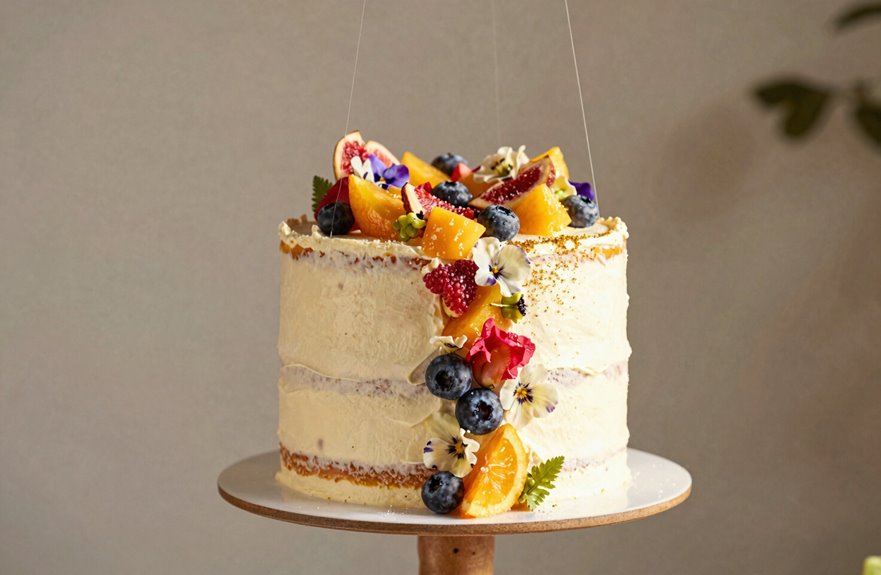
- Pick flavors that mean something – perhaps the one from your first date.
- Match your theme – flower separators, or go stacked if that’s more you.
- Add drama – a water fountain works for three-tier stacked setups.
- Include everyone – free-from options exist. Just chat with your designer.
Your cake should reflect who you are and who you’re celebrating with.
Multi-purpose Sticking Double Hooks - The hooks can be used for hanging your hat, robe, coat, towel, keys umbrellas etc. and also it can be used as Razor Holder,Plug Hooks.It is must have for home,kitchen,and bathroom.

Package & Size: You will receive 1 Set delicate tiered serving tray, measuring 14cm/5.5inch, 20cm/7.87inch, and the height is 23cm/9inch, which is practical and beautiful.

Package & Size: You will receive 2 Sets delicate tiered serving tray, measuring 14cm/5.5inch, 20cm/7.87inch, 26cm/10inch, and the height is 34.5 cm/13.5 inch, which is practical and beautiful.
How Do You Cut and Serve a Hanging Cake?
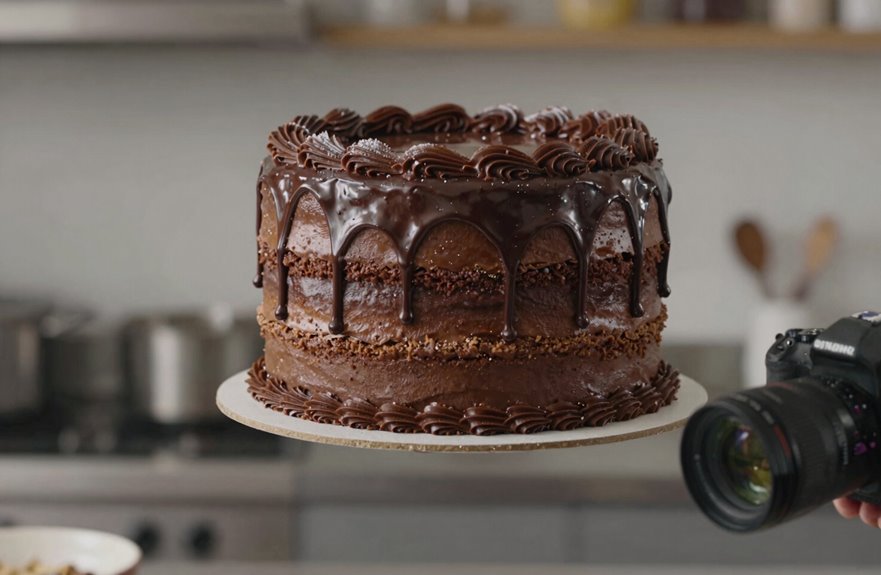
So you’re standing there, knife in hand, staring up at this floating masterpiece and wondering what comes next. Cutting a cake that’s suspended from the ceiling is straightforward once you know the process.
For smaller hanging cakes, you’ll receive a simple guide to share with your venue coordinator. You’ll cut together, smile for photos (capture those credit-worthy shots), then the real work happens backstage. Kitchen staff, or sometimes the designer themselves, handle dismantling each tier from that internal support system.
Larger installations require the designer to stay on-site. They’ve built this structure and know its specific details. You can focus on enjoying the moment while the serving logistics are managed by professionals who understand the setup.

Unique Design:This 4 Tier Round Acrylic Cupcake Stand allows you to place different types of cakes on each layer, The graduated design ensures that every cupcake is visible and easy to pick up. Compared to the cupcake tower, this dessert holder is full of artistry, four layers filled with cakes like four blooming flowers,elegant and noble.

What's included: there are 6 sets of tiered tray hardware kit in this package, available in silver color (crown) 6 sets for style, these cake stand hardware kits are suitable for different styles of plates

Complete Cake Tier Stacking Kit: this cake decorating kit includes 9 silver cake boards in 3 sizes: 8 inch, 6 inch, 4 inch, 60 precut parchment paper rounds, and 20 plastic cake dowels; This cake stacking kit provides enough supplies to build 3 tiered cakes or multiple 1 and 2 tiered creations, making the cake tiering process easier and more enjoyable for bakers
How Much Does a Hanging Cake Cost?
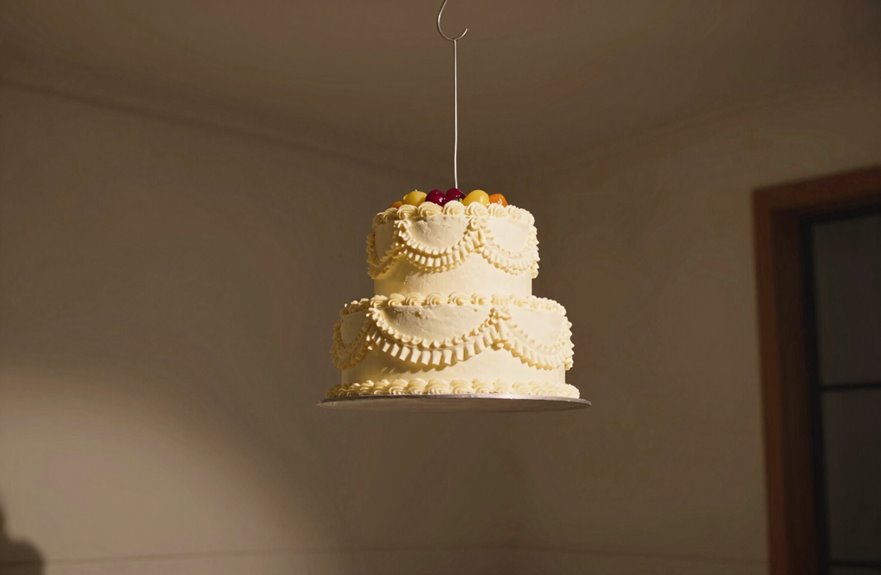
Most hanging cakes run anywhere from $800 to $3,000 or more, depending on how many tiers you want and whether you’re adding those fancy LED saucers. If your budget is tight, some clever bakers create “faux hanging” looks with regular stands and strategic draping that will still impress your guests.
[ Best Helper For Cake Maker ] These plastic cake dowel rods are designed to separate cake tiers slightly and create a floating illusion,will add more charming to your cake.
[ Best Helper For Cake Maker ] These plastic cake dowel rods are designed to separate cake tiers slightly and create a floating illusion,will add more charming to your cake.

Package contents: include 24 pieces plastic white dowel rods, enough quantity to meet your needs, suitable for tiered cake construction
Average Cost Range
How much does a hanging cake actually cost? I’ve seen hanging cake cost estimates swing pretty wide depending on what you’re after. A four-tier cake setup, complete with that internal stainless steel support system, typically runs between $800 and $2,500 for the cake itself. Wedding cake installation adds another layer. The rigging and safety team charges $300 to $800. My friend gasped at her quote, but then she saw the engineering involved.
What you’re really paying for:
- The custom metal framework that holds everything upside down
- Hours of careful assembly, tier by individual tier
- Specialized labor, because one wrong move and cake meets floor
- That moment your guests will actually remember
This is real craftsmanship, not just frosting.
Factors Affecting Price
Pinning down the exact price of a hanging cake means looking at what you’re actually building, and no two setups are really the same.
The price factors that’ll hit your wallet hardest are design complexity. A four-tier hanging cake with delicate cake lace or sugarpaste filigree requires significant time investment. Then there’s that internal stainless steel support system, the one that lets each tier hang upside down. Materials matter too.
Setup and delivery deserve their own conversation. Local venues are usually baked right into your base price. Traveling farther out means mileage fees, which is fair since bakers are transporting delicate work. Custom flavors per tier, special dietary swaps, and your theme colors each add to the cost.
On-site assembly, dismantling help, or fancy extras like LED lighting will increase the price accordingly.
Budget Alternatives
You might be wondering if there’s any way to make this work without draining your savings. I’ve asked myself that same question more than once. Here’s how to stretch your budget while still getting that gorgeous hanging cake moment.
- Book venues within local delivery radius, avoiding mileage charges and unexpected fees.
- Ask your baker about simplified stands; fewer moving parts mean lower installation fees.
- Skip the elaborate custom stand rental and choose a venue that already owns suitable hardware.
- Confirm your deposit early; locking in terms prevents last-minute price hikes.
I’ve seen friends pull off stunning suspended cakes without the premium price tag. With a little planning, you can achieve the same result: a striking hanging cake within your budget.
Where Can You Find a Hanging Cake Specialist?
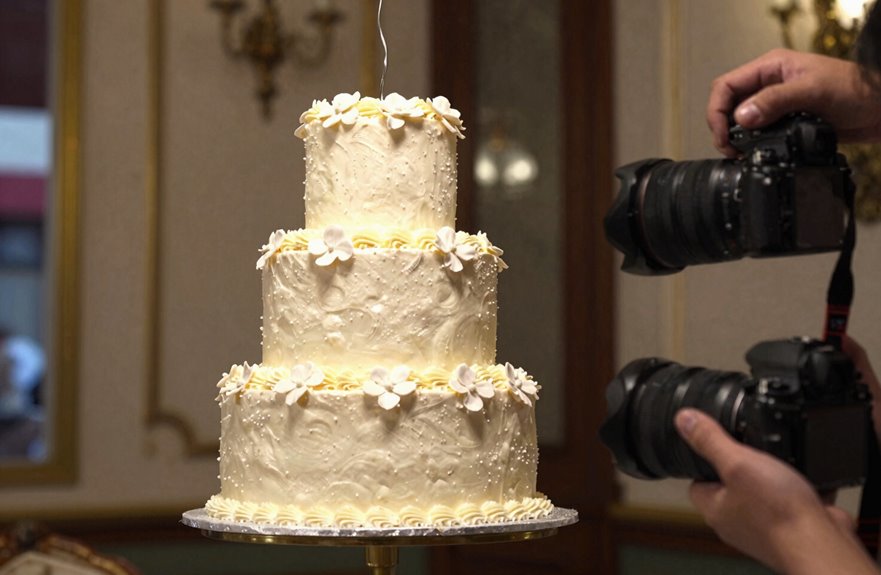
Wondering where to track down someone who can pull off a cake that literally floats in mid-air? Start with designers who’ve actually built hanging cake systems before.
Caitlin Mitchell at A Little Cake Place pioneered this whole thing. Experience matters significantly when you’re suspending wedding cakes from the ceiling.
| Where to Look | What You’ll Find |
|---|---|
| Specialty cake designers | Custom hanging cake builds with proper Cake Frame engineering |
| Wedding expos | Living demos, portfolios, maybe even a tasting |
| Instagram/Pinterest | Real installs, vendor tags, inspiration galore |
| Television features | Case studies like The Brooke Chandelier Project |
Ask about their dismantling process. You’ll need guidance when the party ends and that masterpiece needs to come down safely.


[BREATHTAKING CHANDELIER DESIGN]: Adorned with 36 high-quality acrylic crystal chains that hang elegantly from the 13.75" to 14" rim, creating a mesmerizing "dripping diamond" effect that catches and reflects ambient light for a spectacular visual display.
Can You Build a Hanging Cake Stand Yourself?
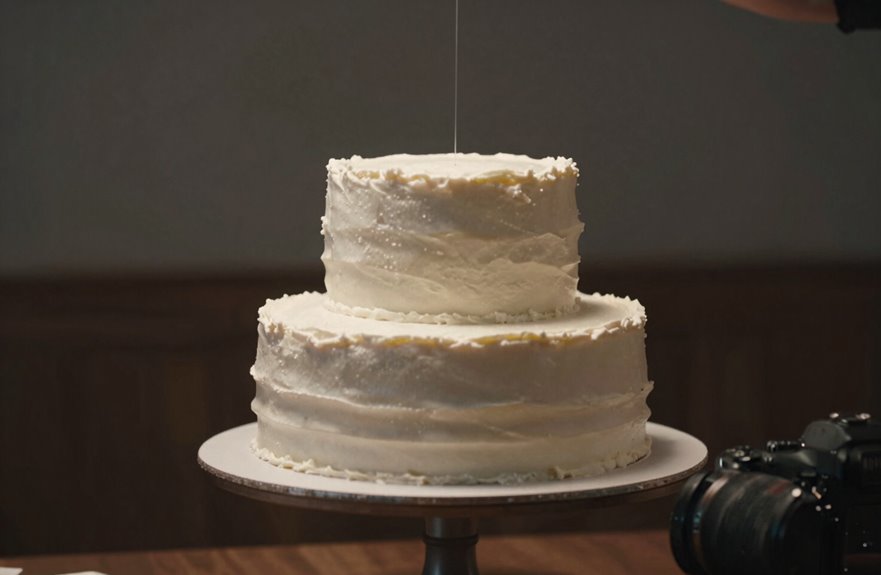
How hard could it really be to build something that suspends eighty pounds of buttercream from the ceiling? The answer is quite difficult.
Eighty pounds of buttercream suspended overhead: engineering challenge, not weekend project.
A chandelier-style stand isn’t just pretty metal. It’s engineering. The weight capacity matters significantly. One miscalculation means your hanging cake becomes floor cake.
What matters most:
- Internal support – Stainless steel, hidden inside, doing the heavy lifting
- Individual tier suspension – Each layer needs its own secure anchor point
- On-site assembly – You can’t improvise this in your garage
- Professional dismantling – Getting it down safely matters as much as putting it up
Building this yourself requires structural knowledge and precision that most home builders lack. Eighty pounds suspended overhead requires a specialist’s expertise, not amateur assembly.
【Wedding Cake Stands】This product is made of high-quality acrylic, which is strong, non-yellowing, non-aging, and not easy to deform for long-term use.
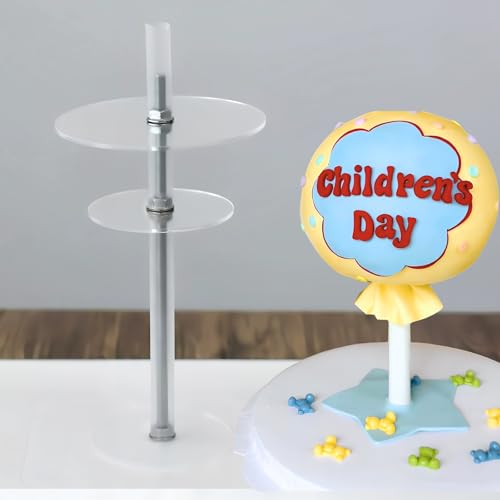
Hide structure: The hanging decorative cake kit adopts a unique hidden structure frame design, which can be cleverly embedded into the inside of the cake without any abruptness on the outside. Paired with decorative elements such as candies, biscuits, and coupled with a highly designed floating top layer, it creates a stunning effect of the cake "floating and hanging" and becomes the focus of the audience.

Package: 1 piece 12 x 18 in garden flag (flag stand or flagpole not included). Fits most standard flag stands
Is a Hanging Cake Right for Your Wedding?
Why exactly would someone want their wedding cake dangling from the ceiling like a chandelier made of frosting?
When I first saw a hanging cake at my cousin’s wedding reception last spring, my jaw actually dropped. There’s something magical about walking into a room and seeing tiers of cake suspended mid-air, catching the light like edible art.
Your venue matters significantly. A four-tier hanging cake needs serious installation and stability planning. Think stainless steel supports, professional wiring, and a baker who knows their technical requirements. Most couples work with local studios, including ABIA-featured designers, who handle the technical installation.
If you want that unforgettable “wow” moment guests will actually Instagram, and you’ve got the budget for specialized setup, a hanging cake delivers on that investment. Don’t DIY the hanging part. Professional installation ensures structural safety and proper execution.