

Plain king cake stays perfect on my counter for one to two days when wrapped tight in plastic. Once there’s cream cheese or custard inside, refrigeration is necessary since dairy left at room temperature for more than two hours can spoil. Let it sit out thirty minutes before serving, as cold cake has a less desirable texture. Your filling type, kitchen warmth, and consumption speed determine the best storage method for your situation. Consider these factors to keep your cake fresh through Fat Tuesday.
How Long Does King Cake Last on the Counter?
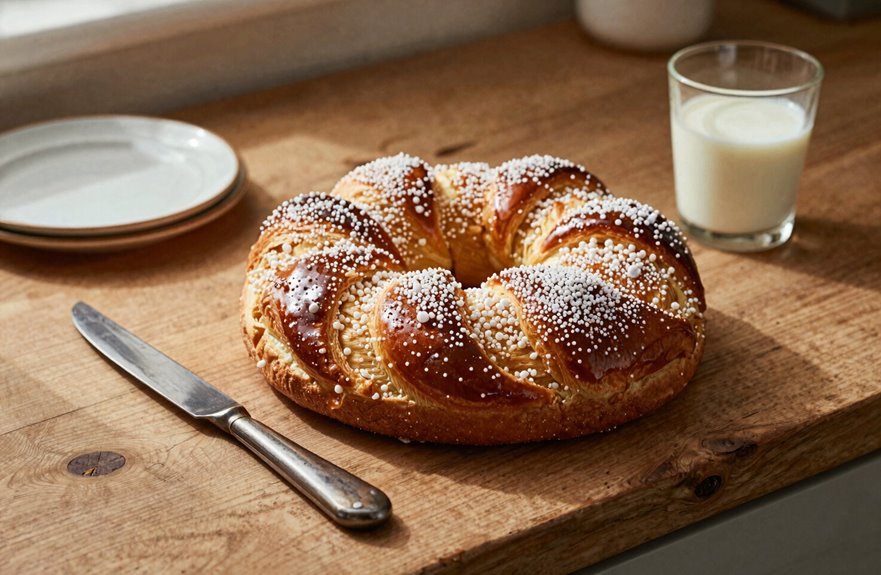
So, how long can you really keep that colorful King Cake sitting out before it goes bad? King Cake will stay at its best for just one to two days on the counter. That’s your sweet spot.
Here’s how I do it: I keep mine in the original box, or I’ll wrap it tight in plastic if the box feels loose. You want an airtight situation, basically. Find a cool, dry spot away from sunlight. Your kitchen counter back corner works, or that unused spot by the bread box.
I’ve pushed it to day three, and it’s not dangerous, just sad. The cake becomes dry and crumbly, losing its quality. Without dairy fillings, you’ve got more time before deterioration occurs, but the quality declines noticeably.
When Refrigeration Becomes Necessary
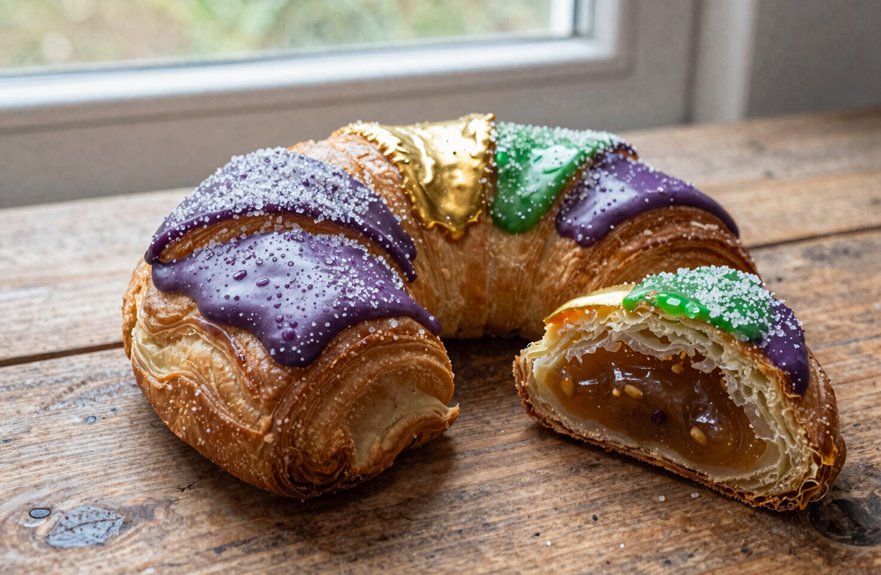
I always check my King Cake for cream cheese or custard fillings first, since those dairy-based ingredients spoil fast at room temperature and pose a food safety risk. If I’m keeping the cake longer than a day or two, or if my kitchen runs warm, I’ll refrigerate it; it stays good for about five days that way. Just remember to let it sit out for 30 minutes before eating, because the texture and flavor improve at room temperature.
Identifying Dairy-Based Fillings
How do you know when your king cake needs to chill? Dairy-based fillings are the clear signal. Cream cheese, custard, or any creamy center means reaching for the fridge.
I learned this the hard way once, leaving a cream cheese-filled cake out overnight. By morning, the filling had turned grainy and separated into an unappetizing layer. Refrigeration keeps those dairy fillings smooth and safe, preventing spoilage that nobody wants at their Mardi Gras party.
When storing king cake, wrap it tight in plastic or use an airtight container. This blocks fridge odors (nobody likes onion-flavored king cake) and keeps the cake from drying out. It stays fresh about five days this way. Before serving, let it sit out thirty minutes so it softens up again.
Understanding Storage Risks
Since dairy-filled king cakes can only sit out for about two hours at room temperature, refrigeration becomes a safety issue for food containing perishable ingredients. When your King Cake holds cream cheese or custard, the fridge becomes necessary for food safety.
Wrap the cake tightly in plastic wrap, then place it in an airtight container. This keeps odors out and freshness in. You’ll get up to five days this way, which means more time to enjoy with your crew.
Let the cake rest on the counter thirty minutes before serving. Cold cake loses its optimal texture and flavor. Unfilled versions can sit at room temperature, but filled ones require refrigeration.
Recognizing Shelf Life Limits
Why does timing matter so much with king cake? Because we’re all trying to savor every bite without wasting a crumb, and I’ve learned this through experience. Room-temperature king cake stays good for one to two days. After that, you’re risking dry cake or worse. That’s when refrigeration becomes necessary. Wrap the cake tightly in plastic first, then place it in an airtight container; it keeps fresh for up to five days that way. If you’ve got cream cheese or custard filling, skip the counter entirely. Refrigeration isn’t optional; it’s necessary. The dairy requires cool storage to prevent spoilage.
Does Cream Cheese Filled King Cake Need Different Storage?
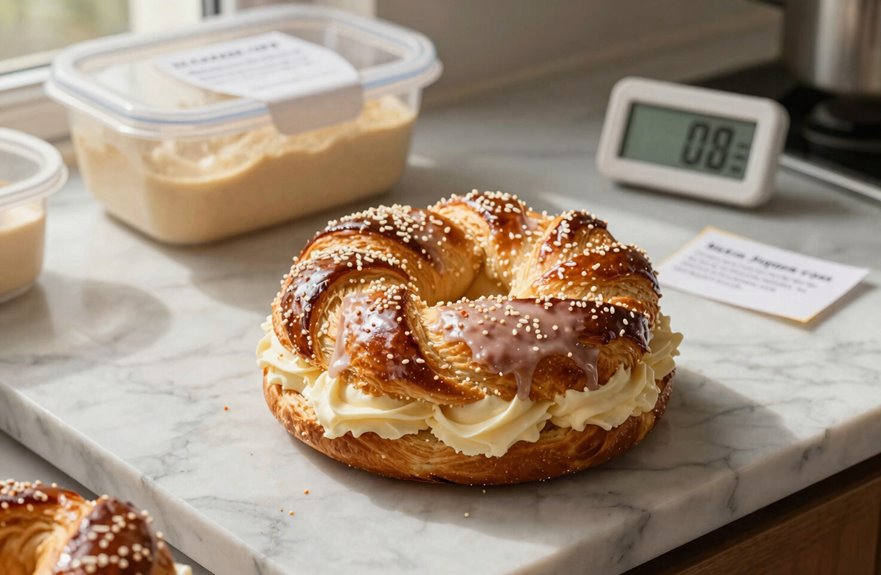
Cream cheese changes everything when it comes to storing king cake because that tangy filling sits in what food safety folks call the “danger zone” much faster than plain dough. You’re looking at two hours maximum at room temperature, perhaps three if your kitchen is cool, which means refrigerating the cake immediately is essential. The filling requires specific storage methods to prevent foodborne illness while maintaining the cake’s texture, since cream cheese spoils quickly at warm temperatures.
Cream Cheese Risks
How exactly do you keep a cream cheese filled king cake from turning into a sad, grainy mess. I’ve learned this the hard way.
Here’s my tried-and-true approach:
- Wrap that beauty tight in plastic wrap, then nestle it in an airtight container
- Always refrigerate, never freeze. Cream cheese turns weird when frozen, becoming clumpy and separated.
- Pull it out 30 minutes before serving so the texture reaches the proper consistency.
You’re looking at about five days of freshness in the fridge. If you’re planning long-term storage, skip the cream cheese filling entirely or freeze the cake unfilled. Dairy and freezers don’t mix well, and the result is grainy and disappointing. Your fellow king cake lovers will appreciate the difference.
Storage Temperature Matters
Cream cheese fillings require different storage considerations. After ruining a king cake one Mardi Gras season, I learned this lesson firsthand. I left it out overnight, and by morning, the filling had turned sour, grainy, and completely inedible.
Refrigeration is essential with cream cheese or dairy fillings. Without it, you risk spoilage and undesirable texture changes. Plain king cakes can sit on your counter for one to three days. Once cream cheese filling is added, you have approximately two hours at room temperature before refrigeration becomes necessary.
Both mistakes taught me that keeping dairy-filled cakes cold protects your celebration.
Filling-Safe Methods
The cream cheese filling requires refrigeration without exception.
Here’s my foolproof system:
- Wrap that cake tight in plastic wrap, then nestle it in an airtight container to prevent odor absorption
- Pop it in the fridge immediately, especially if it’s been traveling; room temperature allows bacterial growth
- Give yourself 30 minutes before serving to let it warm up, because cold cream cheese filling becomes dense
Your cake stays fresh for five days this way. Freezing causes the filling to turn grainy. Refrigeration is the optimal storage method.
Refrigerate King Cake Without Drying It Out
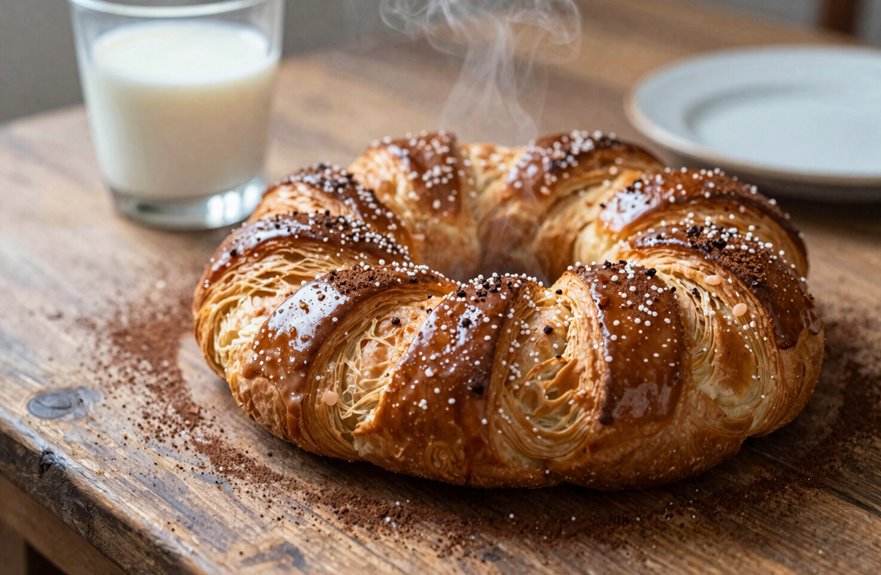
Why do so many king cakes end up sad and dry when we try to save them? Keeping King Cake fresh starts with tight wrapping. I always double-wrap mine with plastic wrap first, then into an airtight container. The fridge helps cream cheese fillings stay safe for about five days, but plain cakes should wait on chilling since too-early refrigeration dries the crust.
Before refrigerating a decorated cake, scrape off that colorful sugar. Then, thirty minutes before serving, let it sit out. The texture returns, the flavor develops, and you can reapply the decorations. This method preserves moisture while keeping fillings food-safe.
Freeze King Cake for Maximum Freshness
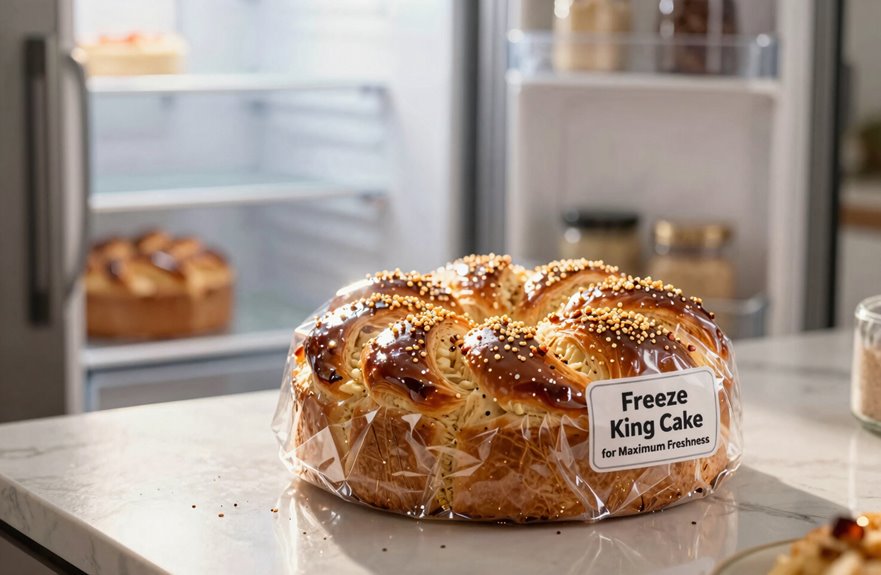
How do you keep that Mardi Gras magic alive when the party’s long over? Freezing King Cake is the secret to year-round enjoyment for serious fans who refuse to let Carnival end.
Freezing preserves that peak freshness for 2–3 months, which feels like finding hidden treasure in July. Here’s how to do it:
- Remove decorative icing and sugar first. Less moisture means a cleaner thaw later.
- Wrap tightly, then stash in a freezer-safe bag or container.
- Date it, because playing “mystery cake” roulette is never fun.
Refrigeration works for 4–7 days, but freezing gives you the ability to celebrate year-round.
Thaw Frozen King Cake Without Ruining Texture
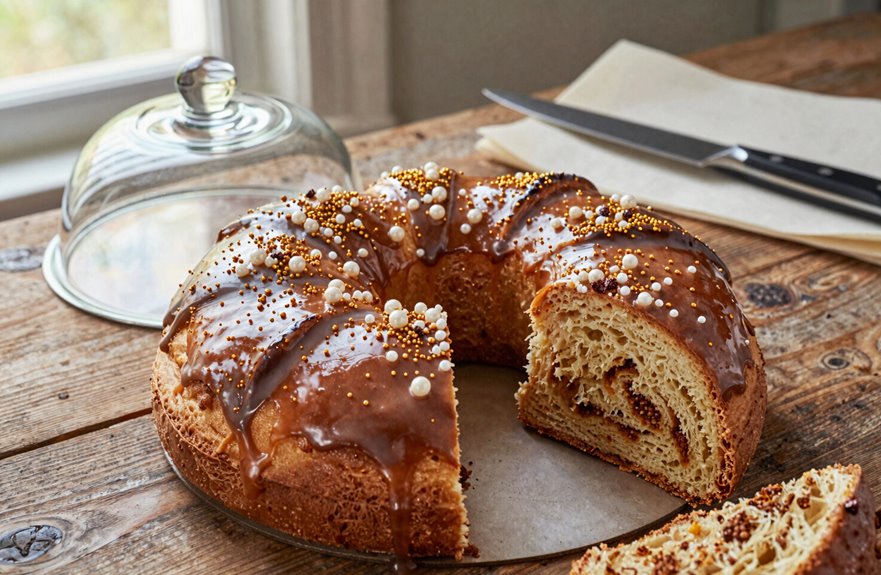
I usually thaw my frozen King Cake overnight in the fridge, then let it sit on the counter for about an hour before serving. This brings back that soft, bakery-fresh texture. You can rush it with a counter thaw for 2–3 hours if you’re pressed for time, but the overnight method really does give you that smoother crumb and glaze that doesn’t crack. Skipping the room-temperature finish leaves the cake a little stiff, so complete both thawing stages for the best results.
Thaw Overnight Fridge
Wondering what to do with that King Cake you stashed in the freezer last month. Thawing overnight in the fridge keeps that King Cake look intact, with no sad, soggy slices.
Here’s how to do it:
- Keep it wrapped tight, so air doesn’t dry out the good stuff (especially important for cream cheese fillings)
- Give it 10–12 hours in the refrigerator
- Let it rest 30 minutes at room temp before eating
Rushing the thaw ruins everything. Room temperature thawing from frozen causes condensation, resulting in a mushy cake. The fridge provides even, gentle warmth that restores the texture you remember.
Room Temperature Finish
Why let a perfectly thawed King Cake sit there, still cold from the fridge, when that final room-temperature rest is what brings it back to life. I always give mine about 30 minutes on the counter; that’s the sweet spot where the icing softens just enough to melt on your tongue.
King cake storage requires wrapping it tight while it rests. After freezing and thawing, that dough’s thirsty. It’ll drink up moisture from anywhere, or lose it just as fast. Leaving edges exposed invites dry, stale edges.
Got cream cheese filling. Add extra time, maybe 45 minutes, and poke it gently. If it’s grainy, it needs more patience. A slightly imperfect cake still beats no cake.
Keep Sliced King Cake Fresh Longer
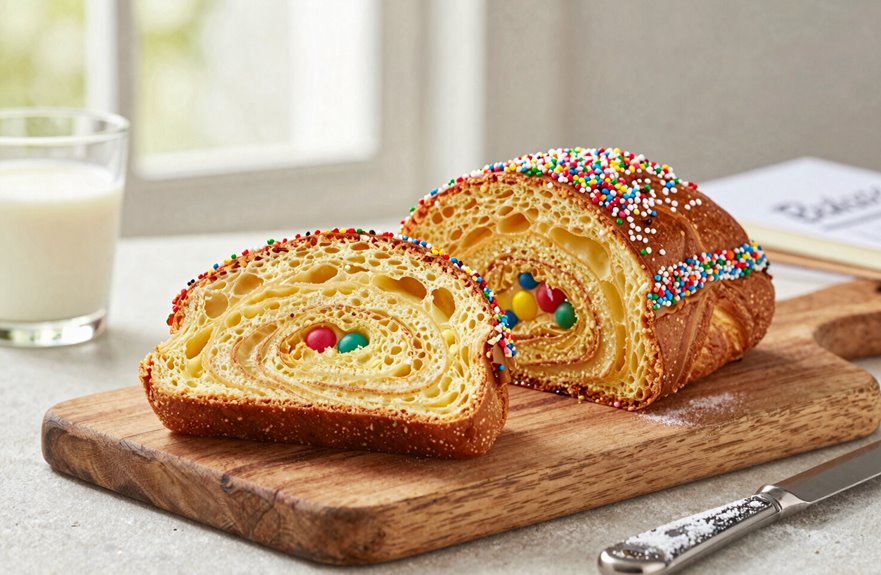
How exactly do you keep those leftover slices from turning into sad, dry crumbs by Wednesday. Refrigeration is your secret weapon here, especially when we’re talking cream cheese or fruit fillings that need a little extra love.
Here’s my tried-and-true method:
- Wrap those cut edges tight with plastic wrap, then rewrap the whole thing so no air sneaks in
- Pop it into an airtight container before it hits the fridge, where it’ll stay fresh for up to five days
- When you’re ready to indulge, let it sit out for about 30 minutes since cold cake’s just not the same
For the long haul, freeze individual slices wrapped well, then thaw in the fridge for 2–3 hours. Your future self will appreciate the effort.
Remove the Plastic Baby Before Freezing?
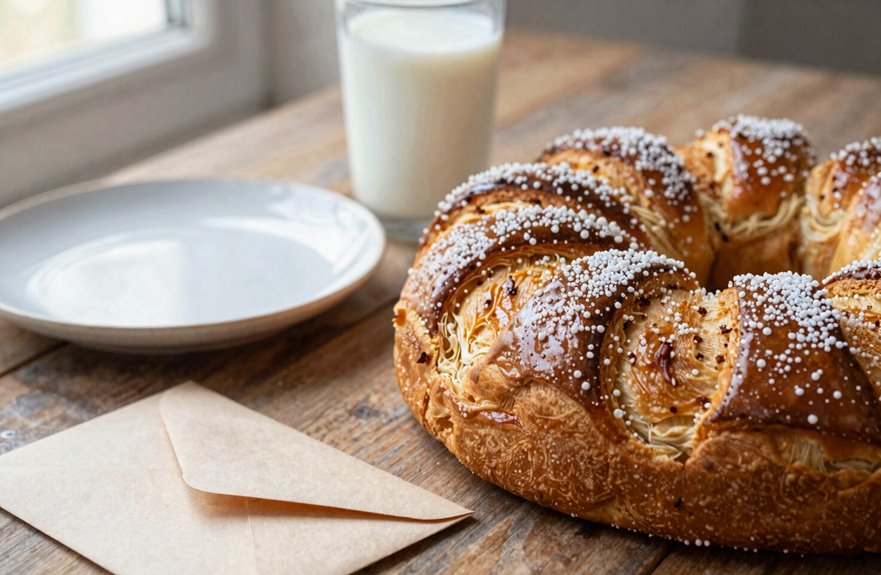
I always pop that tiny plastic baby out before wrapping my King Cake for the freezer, mostly because those little figures can crack or warp in the cold. It’s also a safety consideration; nobody wants to bite into a frozen-solid baby six months from now. Freezer damage can compromise both the cake’s integrity and the safety of whoever eats it later.
Safety Concerns
Where exactly should that tiny plastic baby go when you’re prepping your King Cake for the freezer? Remove it now, or you’ll regret it later. I’ve learned this through experience.
Here’s why this matters for your safety:
- Plastic can crack or degrade in freezing temperatures, creating sharp edges nobody wants to bite into
- Thawing distributes particles if the baby breaks apart, contaminating your cake
- Reheating risks melting the plastic into places it definitely shouldn’t be
When you’re handling refrigeration for dairy-filled cakes, you’re already being careful about food safety. Don’t let a two-inch trinket undo that diligence. I pop mine in a tiny labeled bag, right there with the cake so I don’t lose it. This simple step prevents plastic contamination and preserves your tradition safely.
Freezer Damage
Freezing your King Cake sounds simple enough, but a few small details make or break the results. You want that Mardi Gras magic to last. Freezer burn is the enemy we’re all fighting together.
| Do This | Skip This |
|---|---|
| Wrap cake tightly in plastic wrap | Leave it loose in foil |
| Use a freezer-safe bag or container | Trust the bakery box alone |
| Remove decorative sugar first | Freeze with icing intact |
| Thaw overnight in the fridge | Rush it in hot water |
| Re-wrap after opening | Let air sneak back in |
Cream cheese fillings get weird during freezing, becoming grainy and clumpy. Plain dough freezes much better. Remove the plastic wrap before freezing to prevent cracked cakes when thawed. Proper freezing technique preserves your King Cake effectively for future enjoyment.
Day-Old King Cake: How to Refresh Before Serving
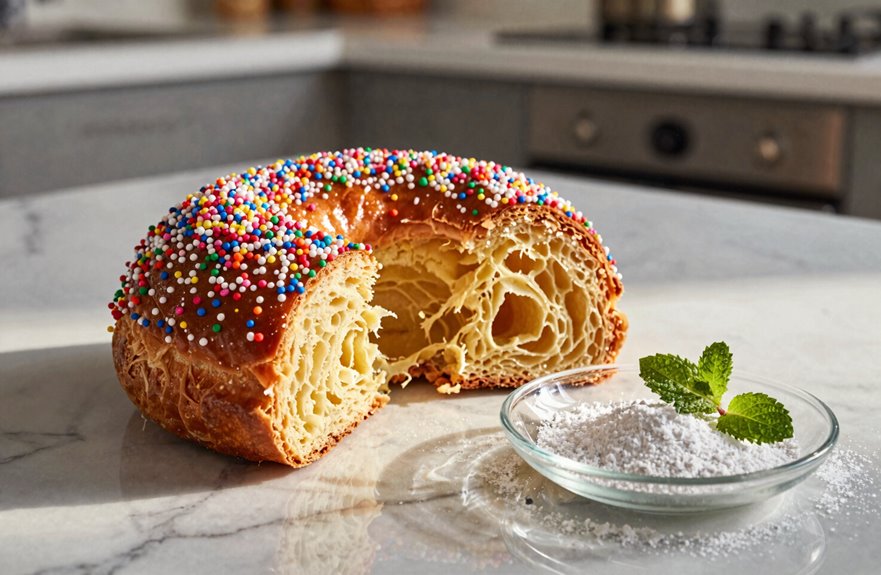
So you’ve got day-old king cake sitting on your counter. That slightly stale ring deserves better than the trash. Here’s how to bring it back to life:
- Lightly mist with water, just a quick spritz, and warm in a 300°F oven for 5-7 minutes
- Wrap in damp paper towel and microwave 10-15 seconds if you’re in a rush
- Let it breathe uncovered for 2 minutes after warming so the crust stays crisp
Now, about refrigeration. Avoid it for day-old cake since that cold air steals moisture fast. But if you’ve already chilled yours, unwrap it and give it a full 30 minutes at room temperature. The texture will noticeably improve, restoring the cake’s original quality.
King Cake Storage Mistakes That Ruin Texture
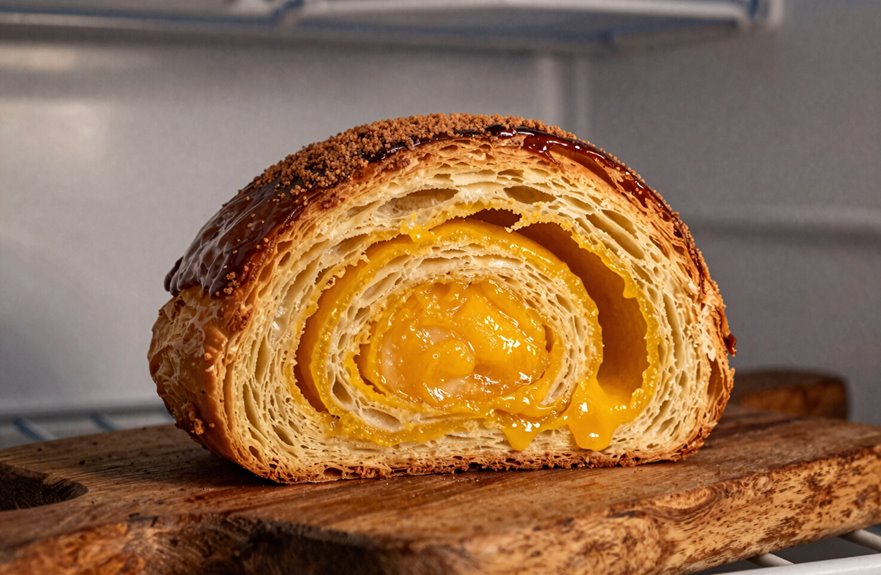
I’ve ruined more king cakes than I care to admit, and almost every time, it came down to how I stored them.
You know that disappointing bite: dry, fridge-tasting, somehow both soggy and stale. I’ve been there.
First, don’t just toss your cake in the fridge without plastic wrap. Without it, that cream cheese filling turns into a dried-out disappointment, and your cake absorbs every weird odor from last week’s leftovers. Nobody wants garlic-kissed king cake.
Plastic wrap isn’t optional—unless you enjoy dried-out filling and garlic-kissed king cake.
Second, skipping the 30-minute rest period after refrigeration is a mistake. Cold cake tastes dense, almost gummy, when what you want is that light, tender crumb.
And freezing. Single-wrap it, and you’ll find freezer burn waiting. Always double-wrap with plastic wrap, then foil. This prevents freezer burn and maintains the cake’s texture for future enjoyment.
Storing King Cake While Traveling or Shipping
How do you keep a king cake intact when you’re hauling it across state lines or mailing it to your cousin in Ohio? I’ve learned a few tricks that’ll keep your cake and your reputation safe.
Here’s what works for me:
- Wrap it tight. I seal mine in plastic wrap, then tuck it into a sturdy container. No shifting, no sweating.
- Freeze for long hauls. Anything over two days, I pop it in the freezer. It preserves that texture we all crave.
- Mind your fillings. Dairy-heavy stuff doesn’t love the freezer, so I plan accordingly or skip it.
When it arrives, let it sit out thirty minutes before slicing. Cold cake tastes flat, and nobody wants that. Your cousin will appreciate the effort.
Store-Bought vs. Homemade: Does Shelf Life Differ?
Whether I’m staring down my own flour-dusted countertop or grabbing one from the bakery down the street, I always wonder if it matters who makes it when we’re talking shelf life.
Both store-bought and homemade king cakes follow the same rules: one to two days on the counter, then refrigeration becomes necessary. I used to think bakery cakes lasted longer with all those preservatives, but cream cheese filling changes everything. Whether I applied it myself or a professional did, that dairy requires cold storage.
I wrap mine tight in plastic, then tuck it into an airtight container before refrigeration. This keeps my cake from absorbing flavors like last night’s garlic chicken, which is essential for serving at the parade.
Your King Cake Storage Timeline: Bake Day to Mardi Gras
The question of homemade versus store-bought sets the stage for what matters most: knowing exactly how to shepherd that cake from oven or bakery box to Fat Tuesday without a crumb of regret.
King Cake storage timeline for maximum freshness:
- Days 1–2: Keep it on the counter, uncovered or loosely wrapped. Refrigerating too soon steals that soft, pillowy texture.
- Days 3–5: Pop it in the fridge and wrap it tight in plastic, then tuck it into an airtight container. Leftover gumbo odors will seep into unprotected cake.
- Day 6+: You’re pushing it at this point, though cream cheese fillings do extend the window.
Before serving, let yours sit out for about 30 minutes. Cold King Cakes lack the flavor and texture of room temperature cake.
King Cake Storage FAQs: Mold, Freezer Burn, and When to Toss
Maybe you’ve peeked into your fridge at that half-eaten King Cake and wondered if those dark spots are cinnamon sugar or something far less festive. I’ve stared at week-old cake, debating whether a quick toast would make it edible again. It won’t.
Let’s talk real King Cake storage. Mold shows up fuzzy, not sparkly. When you see it, toss the whole thing with no exceptions. Freezer burn looks dry and gray; it won’t hurt you, but it tastes unpleasant. Wrap your cake tight in plastic, then foil, then a freezer bag to avoid this fate.
Dairy-filled cakes keep about five days refrigerated, though freezing buys you two to three months. Watch for grainy cream cheese after thawing; that’s a sign the texture has degraded. Check your cake by sight and smell before eating.