

I learned to eat cake with braces after one sticky caramel disaster, and now I’m careful about what I choose.
Soft, fluffy cakes work best, such as pumpkin, chocolate silk, or anything with custard filling. I cut mine into half-inch cubes, use a fork, and chew slowly with my back molars to protect my front brackets. I skip crunchy toppings, nuts, and anything that hardens or pulls on wires. Afterward, I rinse with water right away, then brush after thirty minutes. Protecting your braces requires both selecting appropriate cake types and following proper cleaning protocols afterward.
Yes, You Can Eat Cake With Braces: Here’s Why
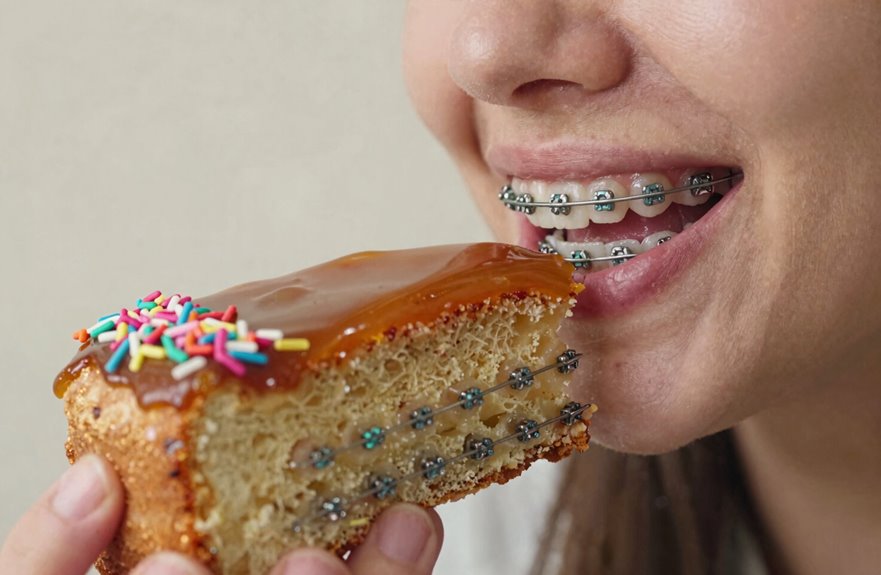
So when I got my braces tightened for the first time, I learned you don’t have to sit in the corner with a sad bowl of applesauce while everyone else digs into birthday cake. Soft foods aren’t just allowed, they’re your friends. A fluffy, moist slice is totally braces-friendly. The trick is skipping the risky stuff: no sticky caramel, no crunchy nuts, no hard crusts that fight back. I cut mine into tiny pieces, maybe an inch square, and chew slow with my back teeth. It feels normal, like I’m not missing out. Cake can absolutely fit into this whole braces journey because you can eat it safely with the right approach.
Which Cake Styles Work Best With Braces?
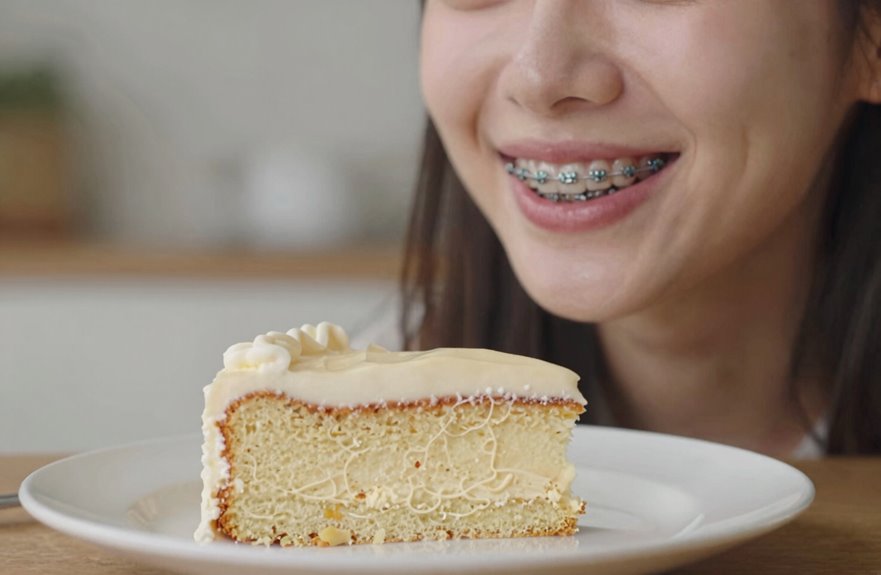
Soft texture cakes like chocolate silk or pumpkin work best with braces since they require minimal chewing. Avoid anything with crunchy toppings, including nut clusters or hard candy sprinkles, as these can damage wires or get stuck on brackets. Cream and custard options, especially key lime with its smooth, tangy filling, allow you to enjoy dessert without risking broken wires or bracket damage.
Soft Texture Cakes
When you’re craving something sweet but your mouth is full of metal, what kind of cake won’t leave you picking brackets out of your dessert? Soft cakes with tender texture are your best friends here. Think pumpkin, chocolate silk, or key lime. These cakes practically melt on your tongue without putting pressure on your wires.
Soft texture cakes work best for braces-wearers:
| Cake Type | Why It Works |
|---|---|
| Pumpkin cake | Moist, dense, no resistance |
| Chocolate silk | Creamy, smooth, effortless bite |
| Key lime | Custard-based, gentle on brackets |
| Cream cakes | Soft crumb, minimal chewing needed |
Taking small bites and savoring slowly makes the experience safer. Brush afterward to maintain your orthodontic care. Enjoying treats during your smile journey doesn’t require emergency orthodontist visits.
Avoid Crunchy Toppings
How exactly do you dodge a dental disaster when frosting hides crunchy surprises? I’ve learned through experience that not all cakes work with braces. Hard foods lurking in pretty desserts create real problems.
Here’s my go-to checklist for staying safe:
- Skip anything with nuts or candy bits—they’ll snag wires faster than you’d think
- Watch out for caramel layers, which pull and stick like nobody’s business
- Choose soft, fluffy bases without crunchy inclusions that stress brackets
- Cut small bites, chew with back teeth, and brush well after. Sugar intake around braces requires attention.
Pumpkin, chocolate silk, and key lime pie work reliably. Finding treats that let you celebrate without emergency orthodontist visits requires checking ingredients and texture first.
Cream and Custard Options
Dig into a slice of Boston cream pie, and you’ll immediately notice why custard-based cakes became my braces-era obsession. That silky, smooth filling, no crunch, no stick, just pure comfort, makes these soft cakes perfect for anyone navigating brackets and wires.
I’ve learned that custard, whether it’s pumpkin, key lime, or chocolate silk, stays gentle on your mouth because it doesn’t harden or crystallize. Pudding layers work beautifully too, adding moisture that means less pressure on your brackets when you bite. I always skip the nuts, hard candy decorations, or anything that might snap a wire.
The best part. We’re all in this together. Enjoy your slice, brush thoroughly after, and know you’re not missing out. These creamy options let us belong to the celebration, braces and all.
5 Crunchy Toppings to Avoid on Braces
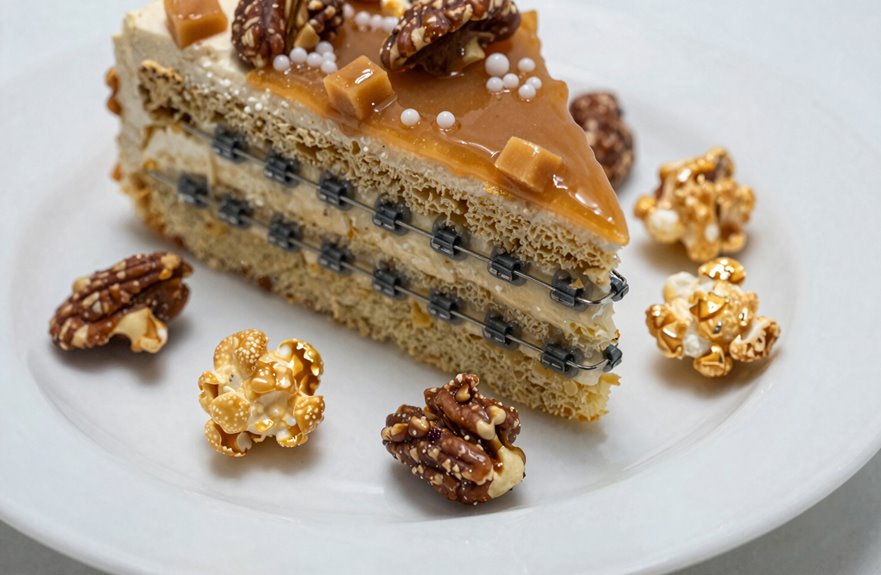
I learned the hard way that hard candy bits and nutty granola clusters can damage braces. You’re biting down, and suddenly you hear that awful crunch that makes your heart skip a beat because you know it’s not the topping giving way. I’ll walk you through why these two offenders top my personal “do not eat” list, and how skipping them can save you an emergency trip to the orthodontist.
Hard Candy Bits
Your braces’ worst enemy might just be that innocent-looking sprinkle of candy crunch on top of a birthday cake. I’ve learned the hard way that hard toppings aren’t worth the risk to my brackets. That satisfying crack you hear? It’s probably something breaking in your mouth, and emergency orthodontist visits aren’t how I want to spend my Saturday.
Here’s what I’m skipping from now on:
- Candy-coated nuts that pretend to be friendly
- Brittle toffee bits hiding in frosting layers
- Hard caramel chunks that glue themselves to wires
- Any sprinkle that doesn’t melt on your tongue
I stick to smooth cakes now, nothing embedded or scattered on top. I brush right after, because nobody wants to find yesterday’s candy stuck where it doesn’t belong.
Nutty Granola Clusters
Why did nobody warn me that granola, yes that “healthy” breakfast staple, could be such a nightmare with braces. I learned the hard way when a nutty cluster got stubbornly stuck, threatening real damage to my wires.
Those crunchy oats and embedded nuts force your bite to work overtime, which loosens brackets fast. If you’re craving it anyway, I get it. Break everything into small, soft pieces first. Skip the big chunks entirely, or swap to nut-free, softened granola that’s gentler on your hardware.
I now keep soft cereals on hand for busy mornings. Brush or rinse immediately after eating. Your braces and your orthodontist will benefit from choosing soft foods over hard ones that risk damage.
How to Cut and Prepare Cake for Safe Eating
How to Make Cake Safe for Braces
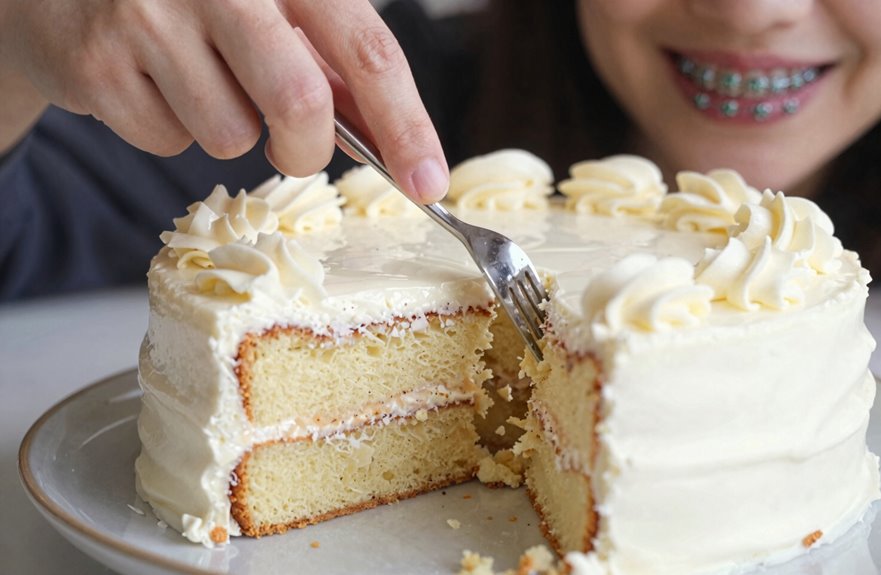
To eat cake with braces, focus on smart preparation. Start with soft cake that isn’t dense or crusty, and cut it into bite-sized pieces, such as half-inch cubes or smaller. A fork works well for this task.
Smart prep makes cake braces-friendly: choose soft, fluffy textures and cut into small, fork-friendly pieces.
Here’s what to do:
- Pick fluffy cakes, skip anything with crunchy toppings
- Cut small pieces, never big wedges you gotta tear into
- Choose custard or cream fillings, they’re gentle on brackets
- Avoid nuts and caramel completely, they cling and pull
Brush your teeth right after eating. Following these steps and maintaining good oral hygiene habits will protect your braces during treatment.
The Right Way to Chew Cake With Braces
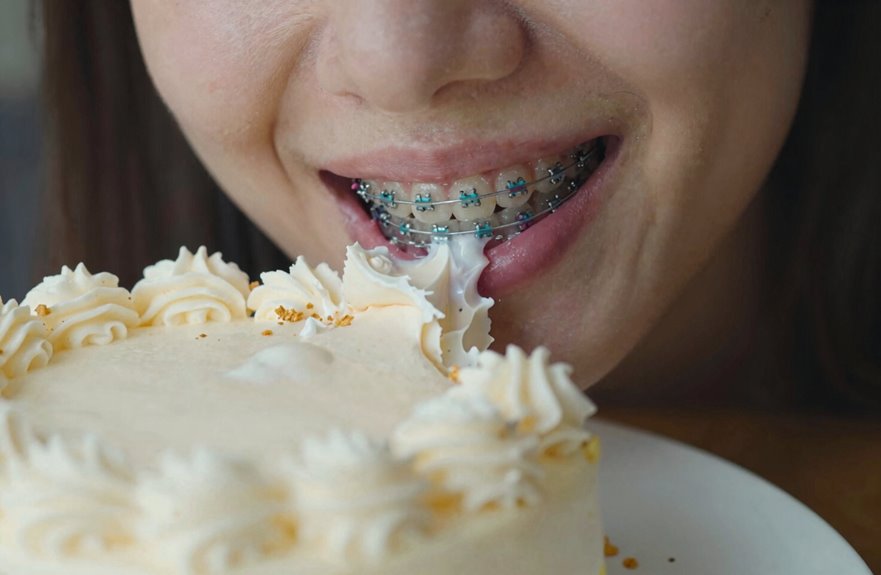
Once you’ve got your cake cut up nice and small, the real eating begins. without wrecking your braces. I always choose soft foods, like fluffy sponge or butter cake, because they’re gentle on my wires. Hard crusts and crunchy stuff, like nuts or candy pieces, should be avoided.
I chew slowly, using my back teeth. My molars do the heavy lifting while my front braces stay safe. It’s not the fastest way to eat cake, but braces care is more important than speed. After I’m done, I brush or at least rinse to get rid of sugar lingering around my brackets. The approach is simple: small bites, smart choices, protected braces.
Why Water Is the Best Cake Companion
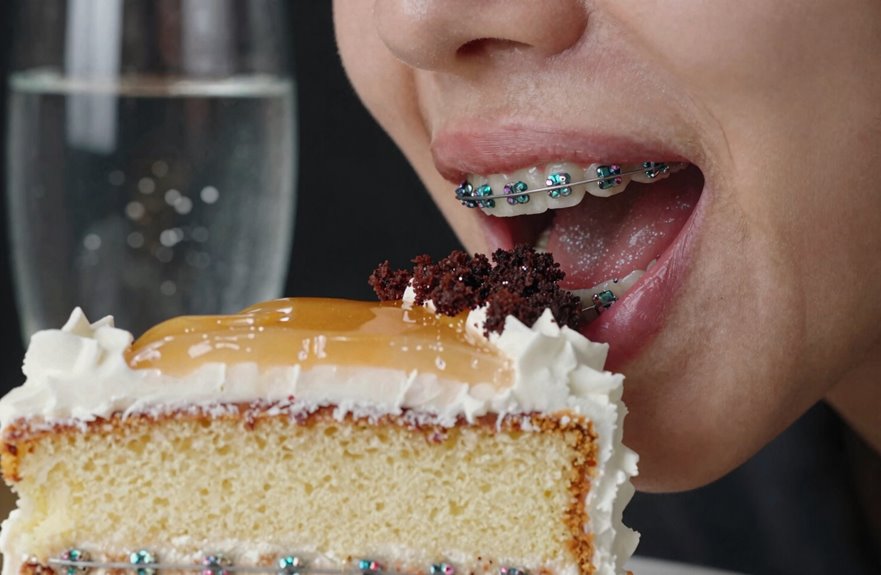
So what’s the one thing I never skip when I’m eating cake with braces? Water. It’s my ride-or-die companion.
- It rinses away sugar and crumbs that love hiding around brackets, which means less plaque drama for us.
- It softens sticky residue before it becomes a problem, saving our wires from weird buildup.
- It swaps out acid attacks. Soda’s fun, sure, but water keeps enamel and braces way happier.
- It stops that post-cake irritation, especially when gums feel sensitive after adjustments.
I’ve learned, the hard way sometimes, that sipping water between bites of cake isn’t boring. It’s an essential part of protecting your teeth and orthodontic equipment. One glass at a time makes a measurable difference in plaque buildup and enamel erosion.
Post-Cake Cleanup: Brush or Rinse?
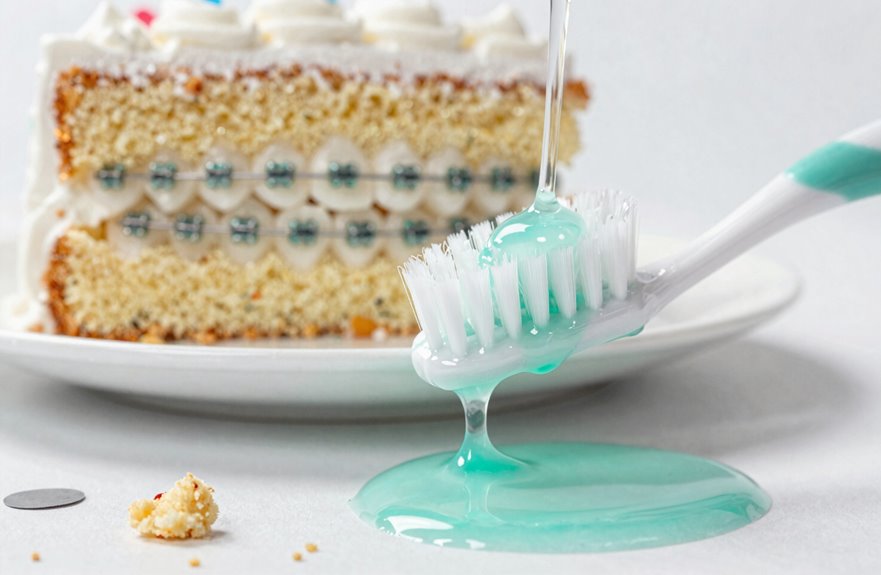
When exactly should I grab my toothbrush after that last bite of frosting? Timing matters more than you’d think.
First, I rinse with water or mouthwash to loosen those sneaky crumbs hiding around my brackets. This initial rinse removes loose debris. Then I wait about 30 minutes. Letting saliva do its work neutralizes acids before I brush, which protects my enamel from damage.
| When? | What I Do | Why It Helps |
|---|---|---|
| Right after cake | Rinse with water | Loosens crumbs fast |
| 0-30 minutes | Wait patiently | Saliva neutralizes acids |
| 30+ minutes | Start brushing | Safe on enamel now |
| Daily routine | Brush twice minimum | Stops plaque buildup |
| Sticky cake days | Floss carefully | Wires trap everything |
Brushing twice daily prevents sugars from accumulating near my brackets. This routine stops plaque buildup and keeps decay at bay.
How Often Can You Eat Cake With Braces?
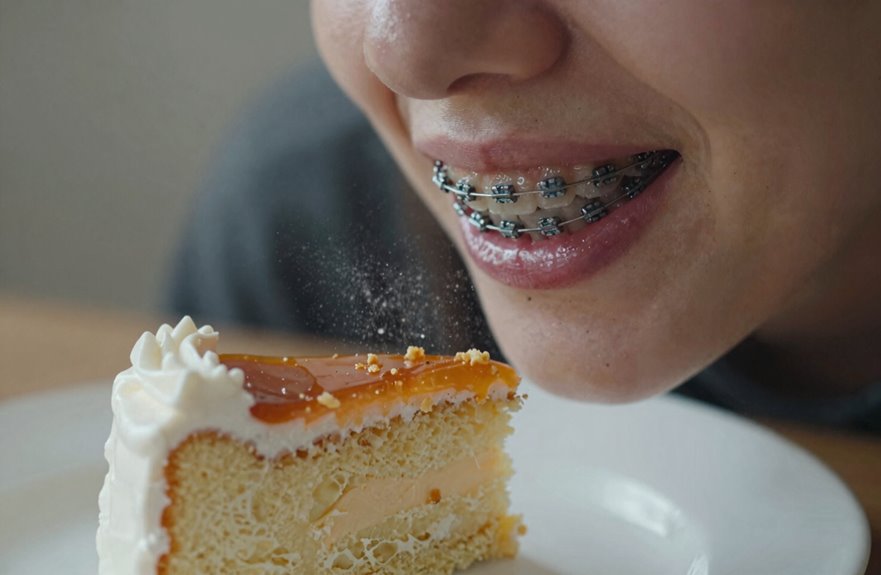
How often can I really treat myself without my orthodontist giving me that disappointed look? Moderation is key. A soft dessert like fluffy cake won’t damage your braces if you approach it carefully.
Here’s my real-world guide:
- I stick to once or twice weekly for cake, which keeps my enamel healthy and maintains good orthodontist relations
- I choose softer options like pumpkin or custard-based cakes, especially after tight adjustments when my teeth feel sore
- I skip hard crusts entirely, cutting even soft cake into tiny, braces-friendly bites
- I brush thoroughly afterward because frequent sweet treats without cleanup leads to plaque buildup and decay
Finding the right balance takes effort. Enjoy your cake, stay consistent with cleaning, and you’ll achieve the smile you’re working toward.
What to Do If Cake Gets Stuck in Your Braces
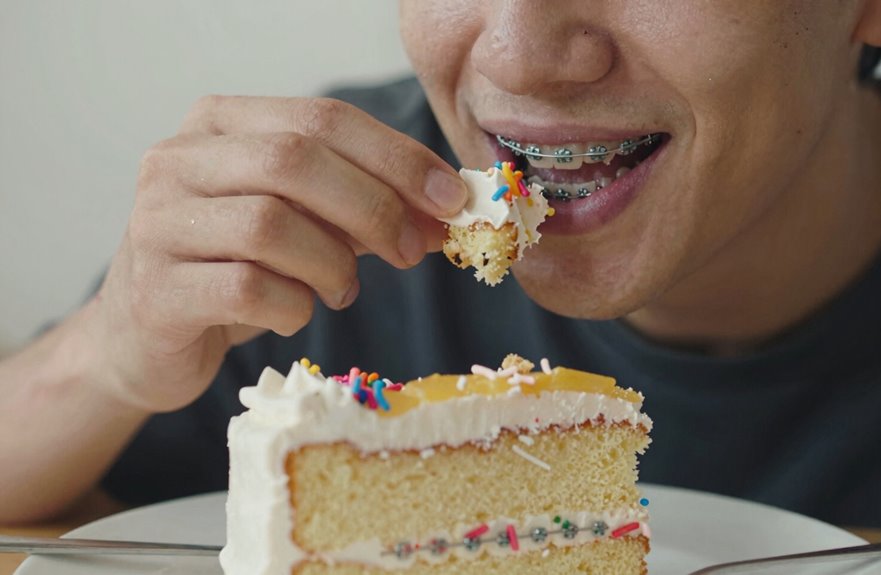
I’ve had cake get stuck in my braces more times than I’d like to admit, and I’ve learned there’s a right way to handle it: start with a quick rinse, then gentle removal, and know when to call for backup. Let me walk you through what actually works, step by step, so you don’t panic or make things worse. Your orthodontist is there to help if you need it.
Immediate Removal Steps
The worst part of eating cake with braces isn’t the chewing; it’s that moment you feel something stuck. I’ve been there, and it’s awkward. Here’s what actually works when cake lodges in your braces:
- Floss gently around brackets to ease out frosting and crumbs without yanking
- Grab a threader or dental pick to lift cake from wires carefully without hard pokes
- Rinse with warm saltwater (half teaspoon salt, eight ounces water) to loosen what’s left and soothe irritation
- Call your orthodontist if pieces won’t budge; sharp objects aren’t worth bent wires
Afterward, brush extra thoroughly, especially your molars. Sugar sneaks into tight spaces around braces and can cause decay if left sitting on teeth.
Rinse Thoroughly First
A warm rinse is your best first move when cake decides to camp out in your braces. I grab lukewarm water, not hot, not cold, and swish for about thirty seconds. This softens the sticky stuff so I’m not fighting dried-on frosting later.
| What I Do | Why It Helps |
|---|---|
| Swish warm water | Loosens cake bits fast |
| Tilt my head side to side | Reaches back corners |
| Repeat twice | Catches what I missed |
| Check the mirror | Spots hidden crumbs |
| Pause, breathe | Keeps me from panicking |
After my rinse, I feel less stressed. The cake slides easier now. I’ll brush gently with my soft toothbrush next, without rushing. Sticky braces happen to everyone. A good rinse makes the whole cleanup manageable and lets you proceed with confidence to the next step.
Contact Your Orthodontist
Sometimes, no matter how careful I am, a stubborn chunk of cake won’t budge from my braces. I’ve been there, poking at that sticky spot between my tooth and wire, feeling frustrated and worried. Everyone experiences moments where home tricks don’t work, and that’s normal in orthodontic treatment.
When cake gets stuck:
- I gently loosen it with a floss pick, working slow and steady.
- I rinse with warm water first, never yanking or pulling hard.
- I grab an interdental brush for those tricky bracket corners.
- If it’s still stuck, I call my orthodontist.
Attempting removal yourself risks damaging your braces or brackets. Your orthodontist can safely remove stubborn food debris and check for any damage to your appliances.
Dense, Crunchy, and Sticky Cakes to Skip
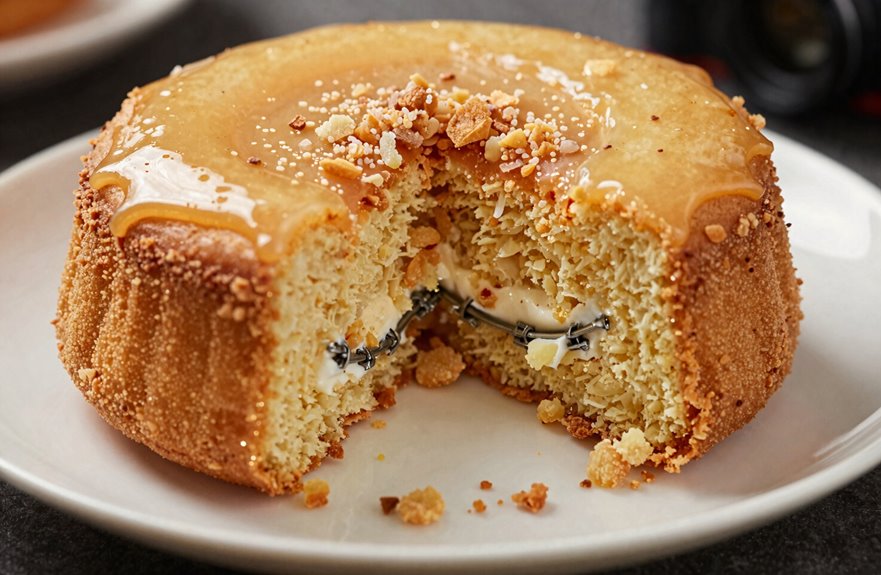
While I love a good dessert, I’ve learned that some cakes just aren’t worth the risk when you’ve got braces on. Dense cakes, the kind that feel like a brick in your hands, put serious stress on brackets. I’ve seen friends pop wires on heavy pound cakes, and that’s not the visit with your orthodontist you want to schedule.
Sticky cakes are another hard pass. Caramel drips, chewy nougat layers, that gooey toffee filling sound appealing until it’s cemented to your wires at 10 PM and you’re digging around with a toothpick. That experience leads to regret.
Crunchy toppings, hard crusts, nut clusters should be avoided as well. A soft, creamy slice cut into small pieces is a better choice than risking months of damage from one stubborn bite.
Other Braces-Safe Desserts Beyond Cake
What else can you eat when you’re craving something sweet but cake feels like too much work? Consider these braces-safe options that let you enjoy desserts without worry.
Here are my go-to soft desserts:
My favorite soft desserts for braces: pudding, custard, ice cream, and smooth pies—sweet satisfaction without the risk.
- Pudding and Jello – they melt right in your mouth, no chewing required
- Custard or soft mousses – creamy, smooth, and totally wire-friendly
- Ice cream – just skip the crunchy toppings, and you’re good
- Pumpkin or key lime pie – smooth fillings without nuts or sticky layers
When selecting soft desserts, check that they don’t contain hard chunks or chewy caramel. These treats protect your braces while satisfying your sweet tooth.