I usually count on about 48 slices from a standard half sheet cake, which measures 13 by 17 inches, when I cut it into tidy 2 by 2 inch squares.
I’ve squeezed out up to 60 tiny portions for big crowds, or gone as low as 32 generous hunks when people want something substantial.
The pan itself doesn’t change, just my knife work.
If you’re feeding a specific number of guests, you can calculate your slice size by dividing the total pan area by your desired portion size.
How Big Is a Half Sheet Cake Really?
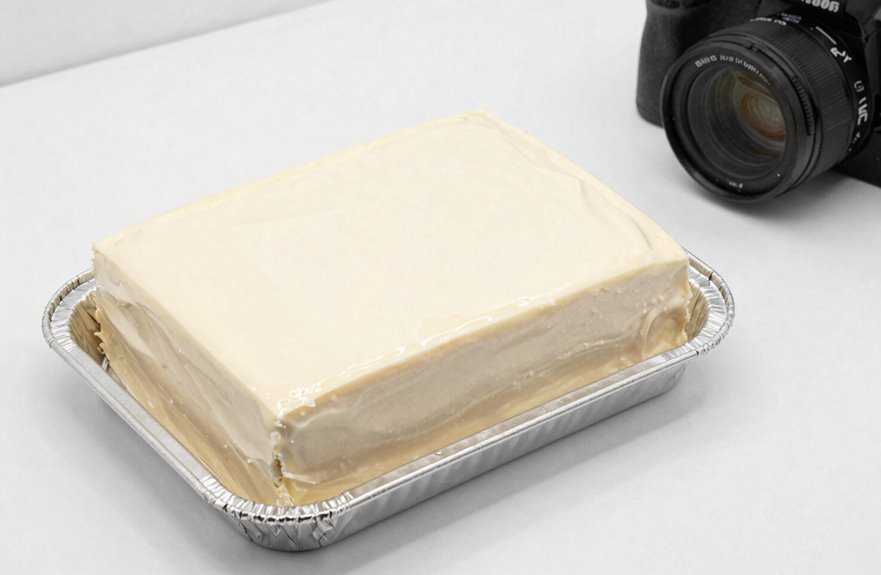
Why do we call it a “half sheet” anyway? I’m pretty sure we’re all picturing something different at first, right? A half-sheet cake measures 13 by 17 inches, which feels way more specific than the name suggests. I used to just nod along when bakers said “half sheet,” but now I actually picture that rectangle in my head. You’ve probably seen these at every office party or graduation, even if you didn’t know the exact inches. These cakes are built different ways; sometimes one layer, sometimes two, depending on how tall and impressive you want it. Layer counts vary based on preference. The 13×17 footprint is the standard measurement we all share when discussing half-sheet cakes.
What Slice Size Serves 45 Guests From a Half Sheet Cake?
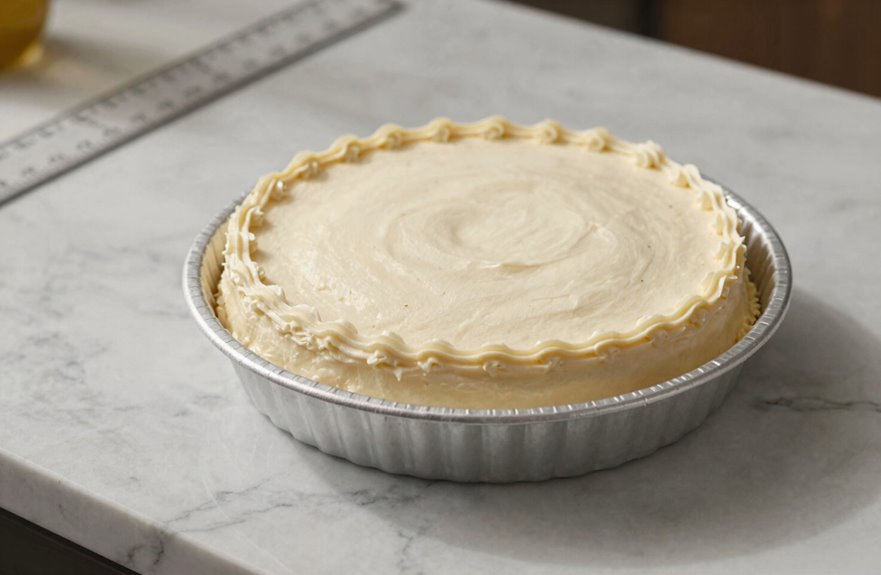
So how exactly do I squeeze 45 servings out of this thing without leaving anyone hungry? The solution is straightforward.
Stick with 2×2 inch slices. A standard 13×17 inch half sheet cake, when cut into tidy 2×2 inch portions, yields about 48 servings, giving you that buffer for 45 guests. I learned this the hard way at my cousin’s baby shower when I went bigger, and the last few people got crumbs.
If you’re tempted by those generous 2×3 inch cuts, resist. Those drop your servings below 45, and you’ll be doing cake math in front of hungry guests. Keep it simple, keep it small, and everyone leaves with a plate.
Half Sheet Cake Servings: 36 to 60 Guests Explained
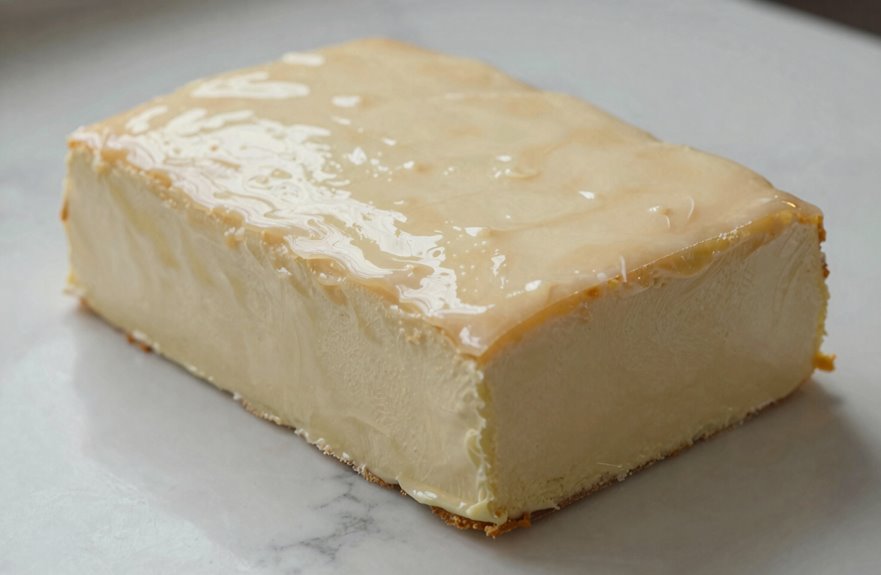
I’ve squeezed 45 servings out of a half sheet, but perhaps your guest list is smaller, or you prefer larger portions. Either way, this approach works well.
A half sheet, that 13-by-17-inch rectangle, is flexible when it comes to servings. Cut modest 2-by-2-inch pieces, and you’ll get roughly 48 servings, perfect for 45 guests with a couple extras. Go bigger, like 2-by-3-inch slices, and you’ll land somewhere around 32 to 36 servings, ideal if guests want something substantial. With tiny portions, you can push toward 60, though that requires precision cutting.
The right choice depends on your party size and preferences.
Why Do 2×2 Slices Give 48 Servings From a Half Sheet?
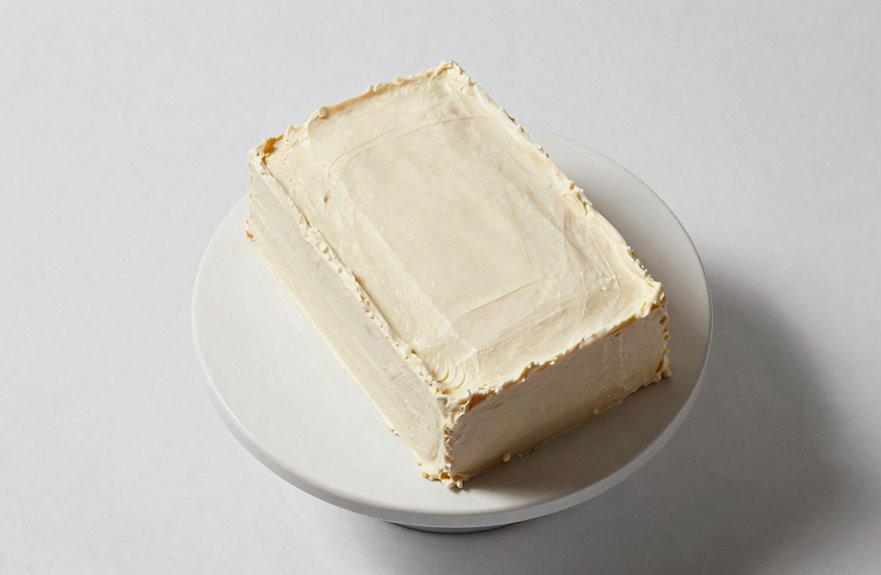
I always wondered why my baker friend insisted on that 2×2 inch guideline until I actually grabbed a ruler and did the math myself. At 13 by 17 inches, a standard half sheet contains 221 square inches of cake, which divides almost perfectly into roughly forty-eight 4-square-inch portions. It’s simpler than it sounds. That size works because it’s big enough to feel like a real treat, yet small enough that you’re not overstuffing guests at a party where they’ll probably want seconds of everything anyway.
Half Sheet Dimensions
A half sheet cake, that trusty rectangle you’ll spot at every graduation party and office birthday, measures 13 by 17 inches, which sounds bigger than it feels when you’re staring down a guest list of fifty people.
Here’s why those half sheet dimensions matter for your 48 slices:
- 13 inches across gives you six 2-inch rows with a tiny sliver leftover (baker’s treat)
- 17 inches lengthwise yields eight 2-inch columns
- 6 times 8 equals 48, simple as that
- That extra inch disappears in frosting, crumbs, and sneaky finger-tasting
Some folks claim 45 servings when pieces shrink slightly. Eyeballing cuts after a glass of wine happens frequently. We’re all figuring out this cake math together, one rectangular celebration at a time.
Slice Area Math
Most of us get a little twitchy when someone whips out a calculator at a party. A 221 square inch cake (13 times 17) doesn’t divide as neatly as we’d hope. A 2×2 inch slice gives you 4 square inches per serving, which should theoretically yield about 55 servings. However, nobody cuts perfect squares, and a 13×17 shape leaves awkward edges. The pros and most home bakers land on 48 servings instead. This accounts for the reality that perfect cuts are impossible, and those wonky corner pieces are desirable to most people.
Party Portion Yields
Why does 13 times 17 equal 48, not 55. Because we’re not filling every inch, we’re cutting smart, not tight. When I slice my half sheet into 2×2 inch pieces, I’m thinking about real party life, not math perfection.
Here’s what actually happens:
- I lose a little to the edges.
- My knife wobbles; nobody’s perfect.
- Some guests want seconds, so I plan for 45, not 50.
- That extra cake disappears fast.
Those 48 servings come from generous, party-sized portions that feel right in your hand. I’ve learned that cramming 55 skinny slices makes everyone feel cheated. We’re building community here, not rationing. Two inches square hits that sweet spot; it’s enough to celebrate while staying small enough to share.
When Should You Cut Bigger 2×3 Inch Slices Instead?
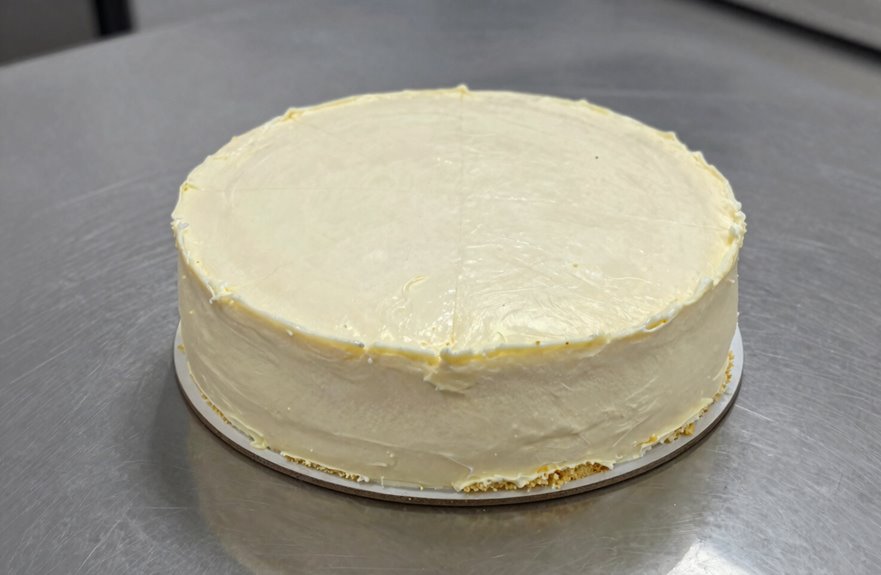
Sometimes you just know your crowd isn’t the “dainty bite” type. When I’m feeding my crew of hearty eaters, I reach for those bigger 2×3 inch slices. You’re looking at servings adjustments that drop your count from 48 down to roughly 32-40 pieces. Nobody leaves feeling shortchanged.
I switch to this size when my guest list is tight, perhaps 30-35 people, and I want that visual impact on every plate. Taller cakes and fancy frosting showcase your work better. The grid shifts a little, but the layout is straightforward to puzzle out.
Bigger slices deliver what matters: satisfied guests.
What Tools Cut a Half Sheet Cake Into Even Slices?
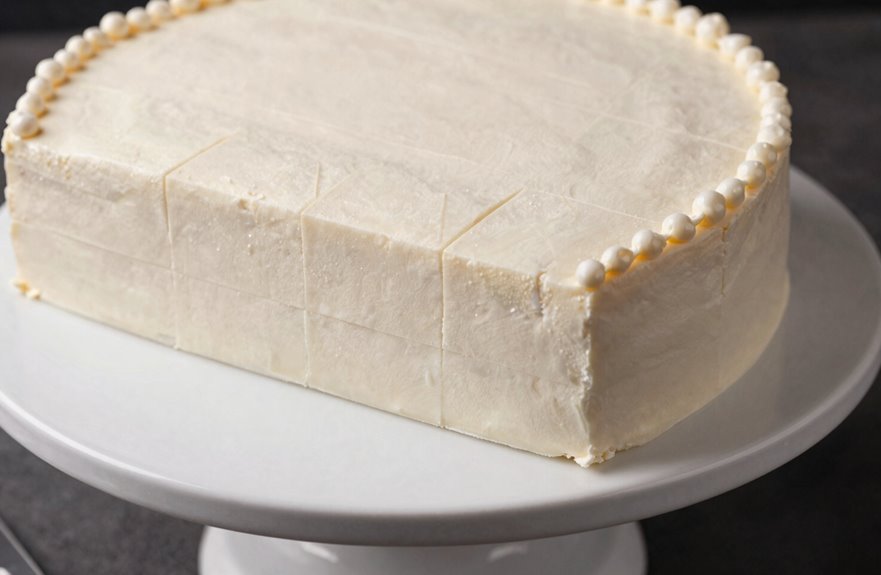
I’ve found that getting those perfect 2×2 inch squares, which give you roughly 48 tidy servings from a standard 13×17 inch half sheet, really comes down to using the right tools. A long serrated knife with teeth that grip without squishing works well. A bench scraper guide also delivers clean, straight edges without wobble. Portion marking tools, consisting of gentle score lines or toothpick guides, prevent uneven spacing and eliminate rows that are suddenly half an inch wider than intended.
Long Serrated Knife
How exactly do you get those clean, bakery-worthy slices without mangling your frosting? A long serrated knife is your best friend here. The teeth grip without dragging, and that extra length, usually 10 to 12 inches, lets you slice straight across your half sheet cake in one smooth motion. No sawing back and forth, no jagged edges.
What works every time:
- Measure first, cut second; mark your grid with toothpicks
- Use gentle pressure, letting the blade do the work
- Wipe the knife clean between each slice. This prevents frosting buildup that causes ragged cuts
- Cut completely through, don’t lift halfway
With a 13×17 inch half sheet, you’ll get those perfect 2×2 inch squares, about 48 servings. Square edges, intact frosting, and satisfied guests result from following these steps.
Bench Scraper Guide
Where exactly does a bench scraper fit into your cake-cutting toolkit? It’s become essential for achieving clean, confident cuts when serving a crowd.
I grab my bench scraper when I need precision across that 13×17 inch half-sheet. The wide, straight edge lets me align along the cake’s side, press straight down, and create perfect 2×2 inch portions without the wobble. I rotate ninety degrees, repeat, and suddenly I’ve got my forty-eight even squares.
What matters here: a longer bench scraper with a non-slip grip keeps you steady, preventing drifting mid-cut. That consistent depth is critical when you’re feeding forty-eight hungry guests. Once you feel that satisfying slice-through, you’ll realize why this tool outperforms lesser alternatives.
Portion Marking Tools
Once you’ve got your bench scraper ready, you’ll need a way to map out those cuts before you commit. Nothing stings quite like a crooked slice when you’re aiming for clean, even serving sizes.
Here’s my go-to toolkit for marking portions:
- Ruler: I use a metal one, 18 inches, for spanning the whole 13×17 cake.
- Toothpicks: I press them lightly, like little flags, to mark my grid before slicing.
- Dental floss: It scores the surface without dragging crumbs everywhere.
- Cutting guide: A simple cardboard template, made from a cereal box, helps me eyeball 2×2 inch squares consistently.
With these, you’ll usually get that classic 48-serving yield. Smaller 2×1.5 inch pieces will boost your count past 48.
Does a Two-Layer Half Sheet Cake Feed More People?
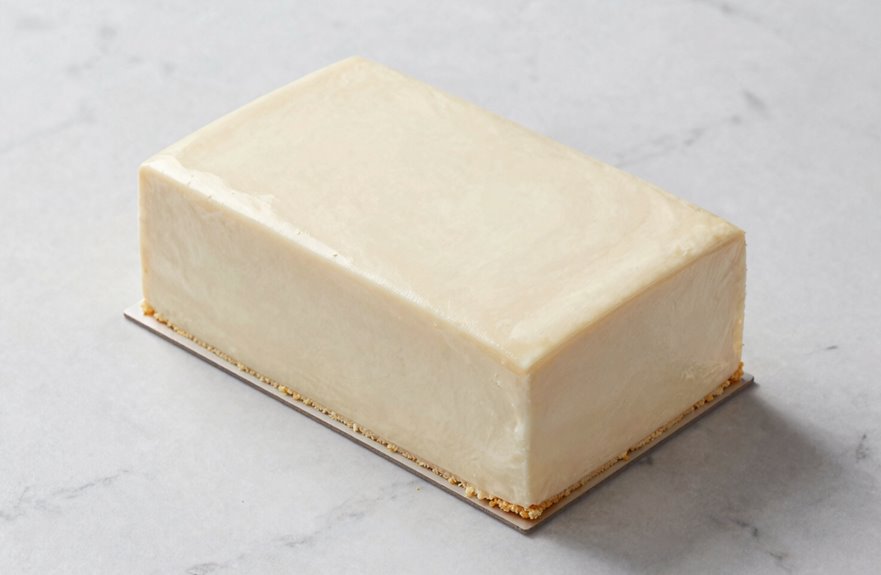
Why does adding a second layer feel like you’re getting away with something? I think it’s because we’re secretly hoping more cake equals more servings without needing a bigger pan.
A two-layer half sheet cake absolutely feeds more people. That 13×17 inch base stays the same, but you’re essentially doubling your cutting surface. With one layer, you get about 48 small servings. Add that second tier, and you’ve got 48 to 60 servings depending on how you slice.
The math works because each layer gives you fresh territory to portion from. For a 45-person gathering, that two-layer setup meant nobody worried about running short. You still cut standard 2×2 inch pieces, but there’s flexibility if someone wants a larger portion.
It’s smart planning that works.
Does a Taller Cake Seem Like More to Eat?
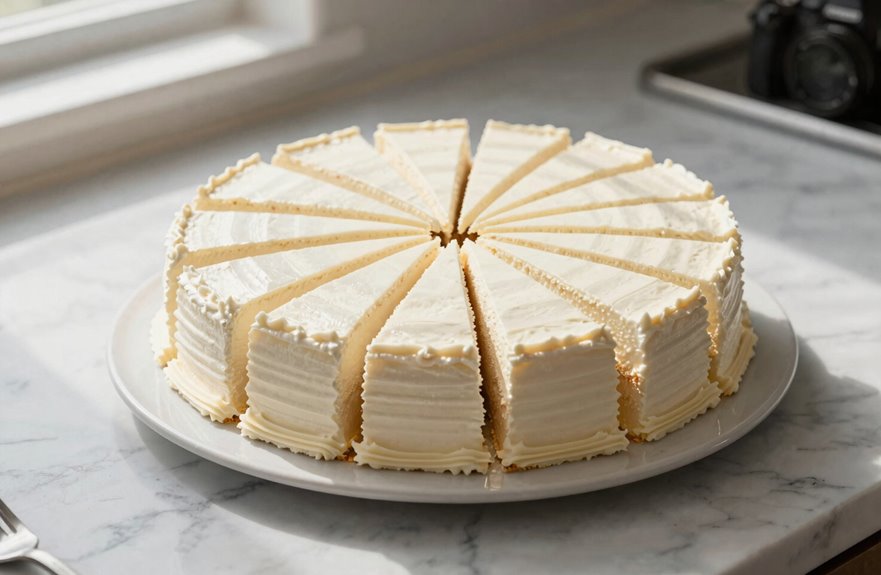
So we’ve covered how that second layer actually stretches your guest list, but that taller cake tricks your eyes.
Here’s what I’ve noticed about presentation magic:
- Height makes slices look generous, even at 2×2 inches
- Layers create visual drama that flat singles can’t touch
- Guests feel special holding something substantial
- Your dessert table suddenly looks professional
The funny thing is, we’re still talking 48 servings from that two-layer half sheet when cut properly. The cake isn’t actually bigger; it’s just wearing better clothes. I’ve watched people pause, smile, then take that “smaller” slice without complaint because the presentation convinced them they’d scored plenty. People respond to visual cues when evaluating dessert portions.
How Much Batter Do You Need for a Half Sheet Cake?
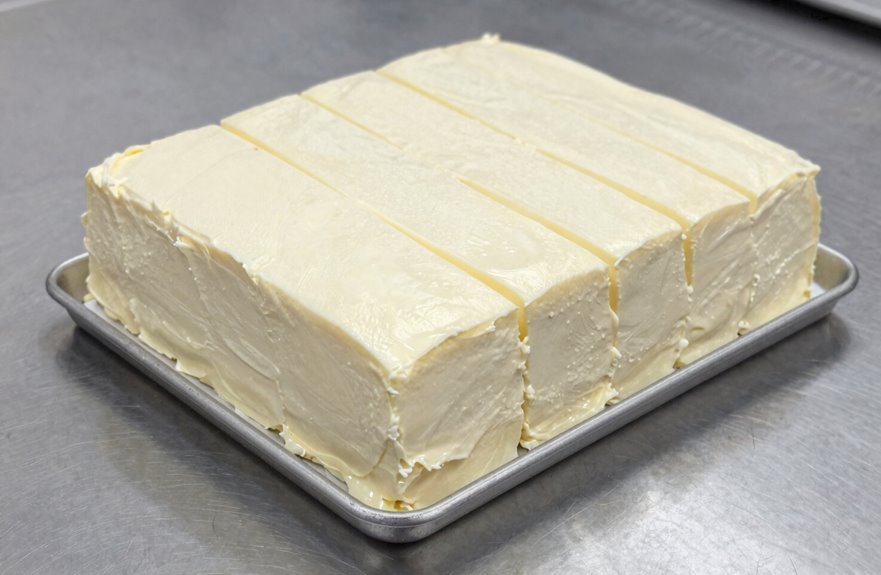
I’ll start with pan size fundamentals: a standard half sheet, 13 by 17 inches, needs two separate layers if you want that bakery-style height. For batter volume calculations, I usually budget about seven to ten cups per 9 by 13 layer, which means I’m mixing roughly fourteen to twenty cups total, depending on how tall I’m aiming. When I’m deciding on layer configuration options, I bake each layer separately, stack with frosting between, and end up with a sturdy cake that feels more impressive than a single-layer approach.
Pan Size Fundamentals
How much batter you’ll need really depends on how tall you’re hoping your cake will stand. A half sheet cake measures 13×17 inches, which feels massive until you’re staring at your mixing bowl wondering if you’ve made enough.
What I’ve learned about half sheet cake batter:
- Two layers are standard, each filled halfway to two-thirds full
- A 9×13 layer uses roughly 7–10 cups for good rise
- Doubling that gets you in the 14–20 cup range for your half sheet
- More batter means taller cake, but don’t overfill or you’ll have a mess
Aim for that sweet spot where your layers bake evenly without overflowing. Underfilling or guessing on batter amounts leads to uneven rising and lopsided results.
Batter Volume Calculations
Why does figuring out batter amounts feel like a math test you didn’t study for? You’ve probably stared at your mixing bowl, pan in hand, wondering if you’ve got enough. A half sheet (13×17 inches) needs about 7–10 cups per layer, depending on how tall you want it. Filling the pan roughly halfway to two-thirds full gives you that nice rise without overflow disasters. For a classic two-layer cake, you’re looking at 14–20 cups total. Scaling up from a 9×13 (which takes about 2 cups) requires more than simple multiplication; batter volume calculations factor in surface area and rise ratios too. Your first attempt may not be perfect, and that’s normal.
Layer Configuration Options
Once you’ve got your batter math sorted out, the real fun starts: deciding how you’re going to build this thing. I’m talking layer configuration, friend, and it affects your sheet cake’s structure and presentation.
You’ve basically got two paths here. Single layer? That’s 7–10 cups of batter, simpler, totally respectable. But I prefer double-layer: about 8 cups per layer, so roughly 16 cups total. Here’s why:
- Taller slices mean cleaner cuts for serving
- That filling layer creates superior texture and flavor
- Sturdier structure holds up better at parties
- It looks more impressive
Since a 9×13 pan holds 14–15 cups, I double my recipe and bake two separate half-sheet pans. Your sheet cake will benefit from the added height.
How Do You Calculate Your Own Servings From Pan Size?
Maybe you’re staring at your own oddly-sized pan right now, wondering if it’ll stretch to feed your cousin’s wedding crowd or just your book club of six.
Here’s my go-to formula: multiply your pan’s width by its length, then divide that by your planned slice size (width times length). For example, an 18×24 inch sheet cut into 2×3 inch pieces gives you roughly 72 servings. Your slice dimensions significantly affect the outcome. Smaller cuts mean more servings, while bigger cuts mean fewer.
Always round to the nearest whole number, because nobody wants 0.3 of a brownie. Grab your tape measure, do the math once, and you’ll have accurate serving calculations every time.
What Pan Sizes Do Bakeries Call “Half Sheet”?
So when bakeries say half sheet, they’re usually talking about one of these sizes:
- 13 x 17 inches – the classic half sheet most guides reference
- 12 x 18 inches – close cousin, practically the same cake
- Single-layer – yields about 48 servings at 2″ x 2″ cuts
- Multi-layer – same pan name, more slices from extra height
The confusion around half sheet terminology is common across the baking industry. Ask your bakery directly what their half sheet measures.
How Do You Transport and Store a Half Sheet Cake?
How do you get a 13×17 inch cake across town without turning it into abstract art? Transportation matters just as much as baking.
I always grab a sturdy half-sheet box first, then add a non-slip mat underneath so nothing slides around. When I’m moving multiple cakes, I stack one per box or use a mobile dessert carrier to keep everything stable.
For storage, I wrap frosted cakes tight and pop them in the fridge or freezer. Let them thaw at room temperature before serving. Keep the cake flat, avoid temperature swings, and deliver within a few hours. Proper handling prevents frosting damage and maintains cake quality.
Should You Bake or Order Your Half Sheet Cake?
Why agonize over a decision that boils down to time, skill, and what your kitchen can handle? I’ve stood in that same spot, flour on my counter, wondering if 48 servings from my own oven would actually feed everyone or if I’d end up with a lopsided, stressed-out mess.
Consider these factors:
- Do you own a 13×17 inch pan, or would you need to buy one?
- Can your oven heat evenly for that long bake?
- Do you want total control over flavors, or does consistent quality matter more?
- Will you actually enjoy the process, or just resent the cleanup?
Baking works when you want that personal touch. Ordering works when timing’s tight and you need those servings guaranteed perfect. Each choice has practical trade-offs depending on your situation.