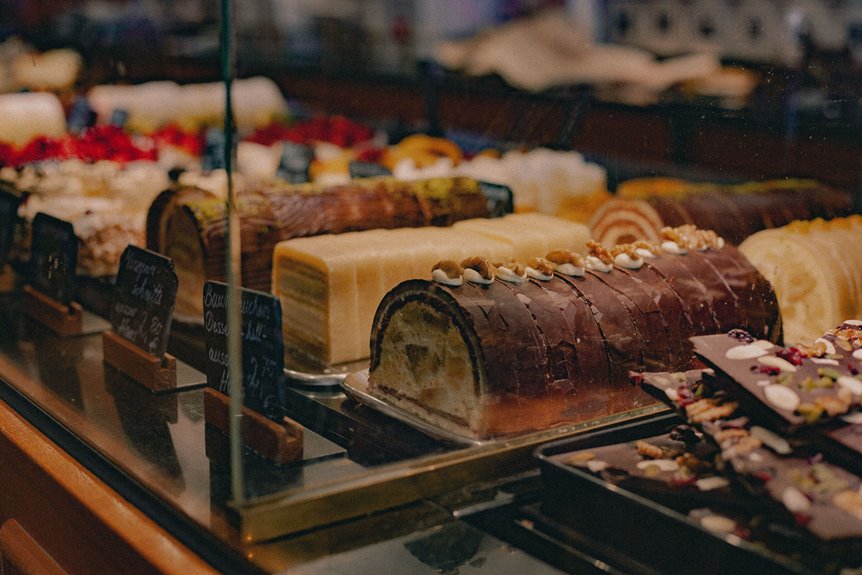
A gateau is a cake with ambition. It features layers of light sponge, usually made with beaten eggs instead of baking powder, stacked with generous fillings like pastry cream, mousse, or boozy cherries.
The sides stay unfrosted so everyone sees exactly what they’re getting into. The word is French for “cake,” though in professional baking it refers to a more elaborate dessert that rewards careful preparation.
Additional details about gateaus are available if needed.
What Is a Gateau Cake Exactly?
So, what exactly makes a gateau a gateau, and not just any old cake you’ve slapped together on a Saturday afternoon? It’s all about what’s happening inside. A gateau is that showstopper you bring to the table, with layers stacked with intention, each one hiding something wonderful: cream, mousse, ganache, or fresh fruit peeking through. The fillings aren’t just extras; they’re the whole point. My first Black Forest gateau exemplifies this, chocolate sponge soaked in kirsch with cherries tucked between clouds of whipped cream. No heavy frosting shell here, just elegant, exposed sides showing off those stripes. It’s richer and more deliberate than your everyday cake. When you make one, you’re building something that invites everyone in, slice by beautiful slice.
Where Did the Gateau Originate?
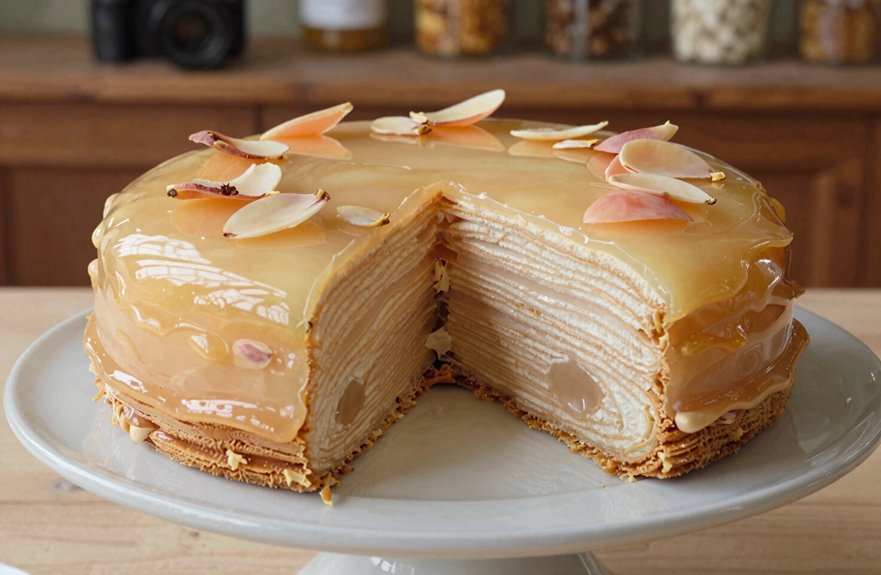
The word “gateau” comes straight from French, where it simply means cake. Over time, it has evolved into something far more specific and elaborate. Different regions in France shaped the gateau by adding their own characteristics. The Basque country developed the almond-filled Gateaux Basque, while Parisian pastry shops created cream-heavy versions. French linguistic roots and regional evolutions transformed a simple word into a category of elaborate, layered desserts.
French Linguistic Roots
When I first stumbled across the word “gateau” on a bakery menu years ago, I pronounced it wrong (very wrong, actually, somewhere between “gate-oh” and “gat-too” before a kind server gently corrected me). The roots run deep in French tradition.
- “Gateau” simply means cake in French, though “gâteaux” covers the plural spread
- In France, any cake qualifies; English speakers reserve it for fancier, layered builds with pastry-cream filling between sponges
- The word signals refinement, those towering slices you spot through pastry-case glass
- Cajun French speakers twist it into sweet nicknames, which is a charmingly unexpected usage
- Watch those accents. Gâté means spoiled, gâteux gets insulting, and context determines meaning.
That accent mark carries significant weight in French. Getting it right prevents misunderstanding.
Cultural Regional Evolution
Where exactly did the gateau get its start? I trace it back to France, where bakers transformed simple cakes into art through layering, stacking delicate sponges with cream, mousse, or ganache. The visual reveal when you slice in became essential to the dessert’s appeal.
Gateaus invite appreciation for more than just taste. Once you recognize those visible fillings peeking through the layers, you understand what distinguishes this dessert from others.
| Regional Style | What Makes It Distinctive |
|---|---|
| Classic French | Multiple thin layers, minimal outer icing |
| Black Forest | Kirsch-soaked chocolate, cherries, whipped cream |
| Tropical Variations | Exotic fruits, liqueur-infused creams |
| Gateau Basque | Cookie crust, vanilla pastry cream center |
| Modern Interpretations | Bold flavor pairings, deconstructed layering |
Regional influences continue to reshape this dessert. Every corner of the world adapts gateau to local tastes and available ingredients, creating distinct variations that reflect cultural preferences and culinary traditions.
What Makes a Gateau Different From Regular Cake?
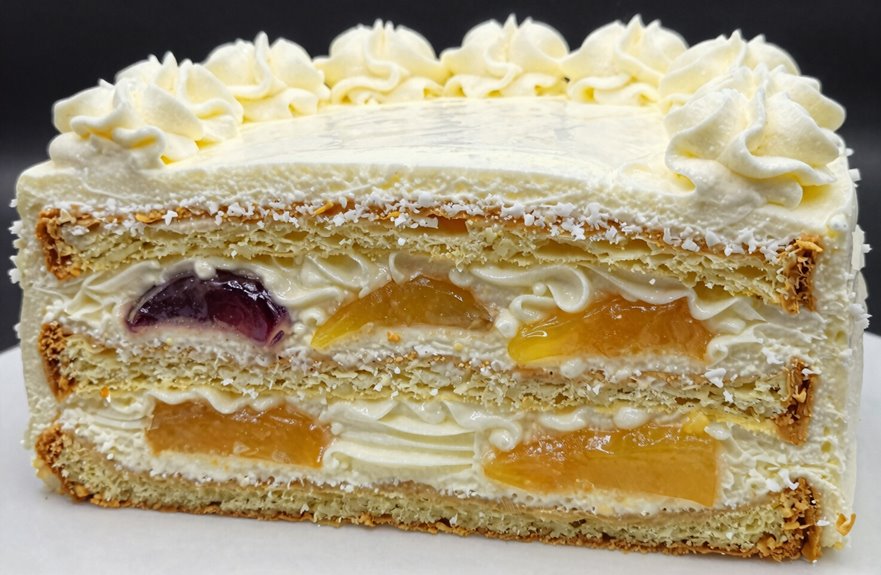
The gateau-cake distinction trips me up sometimes. Here’s what I’ve learned to look for:
- A gateau shows off its layers, rather than hiding them under thick frosting
- You’ll find rich fillings, cream, mousse, ganache, between those visible layers
- The crumb itself lifts from beaten eggs, not chemicals, so it’s airier than most cakes I’m used to
- Presentation matters more: fruit decor, fondant work, edible touches arranged with intention
- It carries that refined French identity, meant for moments worth celebrating together
When I compare a basic butter cake to a proper gateau, the difference feels cultural, almost. We’re not just baking; we’re joining a tradition that asks more of us and rewards everyone at the table.
How Do You Build Classic Gateau Layers?
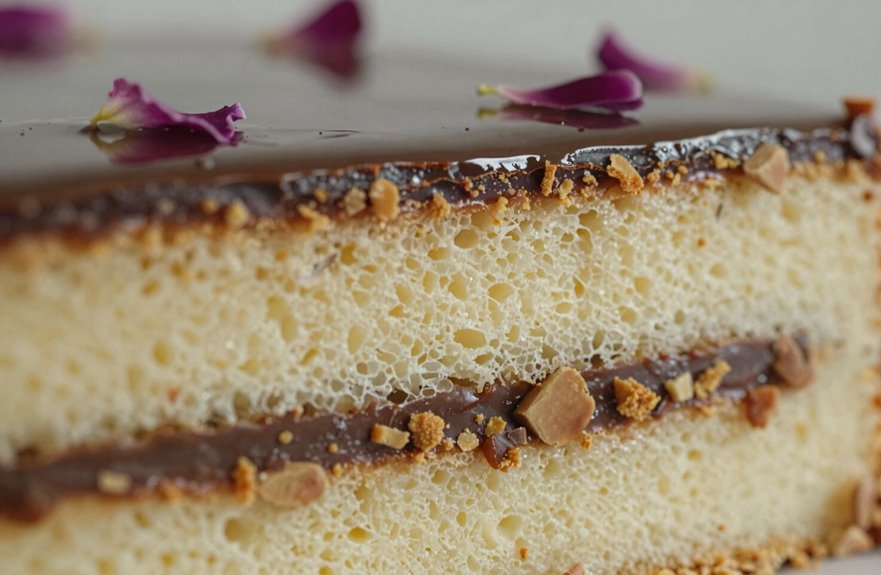
I start my gateau by whipping whole eggs (or yolks and whites separately, if I’m feeling fancy) until they’re pale and tripled in volume, then I gently fold in sifted flour at 350°F for a feather-light sponge foundation that’ll hold up without tasting rubbery. Once cooled, I’ll slice that dome into three even layers, usually about ¾ inch each. No ruler needed, just a serrated knife and a steady hand. Before spreading my filling assembly, I alternate mocha mousse or raspberry preserves, sometimes both if I’ve got leftover ganache from last week. You don’t need to frost the whole thing like those towering American buttercream monsters; I leave the sides naked so those pretty layers show through, then crown it with a dusting of powdered sugar and whatever berries look decent at the store. Your gateau will taste amazing even if it’s slightly lopsided.
Sponge Foundation Method
Building classic gateau layers comes down to one thing: getting your sponge right from the inside out.
I whip whole eggs (or yolks and whites separately, depending on your mood) until they’re pale and tripled in volume. This creates lift without baking powder. Then I gently fold in flour, careful not to deflate all that precious air. These factors matter most:
- Room temperature eggs whip faster, so I don’t skip that step
- I bake in thin sheets, not thick rounds, for that classic layered look
- A springform ring keeps my sponge cake edges neat while I work
- I trim the top crust off one layer, saving it for pressing into the filling
- I never frost the sides. Let that filling peek through for visual contrast
Filling Assembly Technique
Once that sponge has cooled completely, cold to the touch, you’re ready to stack it up. Slice your sponge into three even layers with a long serrated knife. Spread pastry cream thick on that first round, about half a cup. Add fruit compote for color, then another sponge layer. Repeat with whipped cream this time, and berries if desired. Stack three layers tall and straight, then crown the top with more cream and fruit. Dust with powdered sugar. This technique keeps frosting minimal on the outside while maximizing flavor and texture on the inside.
Which Famous Gateau Varieties Should You Try?
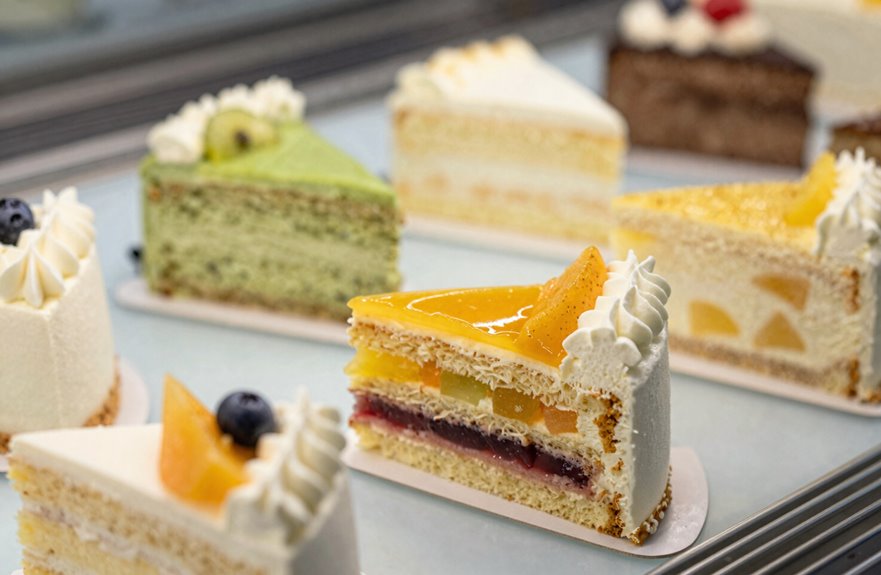
Where do you even start when every gateau looks like it belongs in a museum? I’ve selected my absolute favorites to help you find your perfect match.
- Black Forest brings together chocolate sponge, kirsch, cream, and cherries in layers that create an impressive dessert.
- Chocolate gateau keeps things simple with ganache or mousse between velvety chocolate layers.
- Gateau Basque wraps vanilla pastry cream in a crumbly crust that delivers comfort in every bite.
- Gâteau Breton offers dense, buttery richness in every shortbread-like bite.
- Any French gateau topped with fresh fruit or chocolate accents makes for an excellent dessert choice.
Each one provides a satisfying dessert experience that justifies taking the time to enjoy it properly.
What Is Black Forest Gateau Made Of?
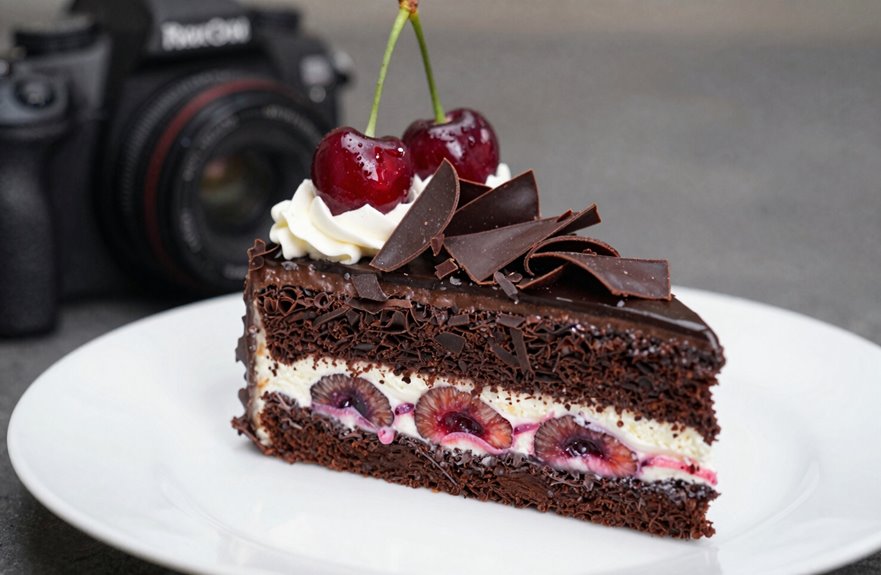
I think you’ll love how a classic Black Forest gateau comes together. It’s one of my favorite desserts to both make and eat. The magic starts with those chocolate sponge layers, which I always soak with kirsch (that’s a cherry liqueur, by the way, though you can skip it if you’re serving kids or just don’t drink). Between those soft, boozy layers you’ll find this remarkable cherry cream filling. Whipped cream and tart sour cherries create this perfect contrast of rich, fluffy, and juicy in every single bite.
Chocolate Sponge Layers
Several layers of chocolate sponge form the sturdy, delicious foundation of any proper Black Forest gateau. This is where the magic really starts. Rich cocoa powder makes the batter deeply flavorful, giving you that deep, moist crumb that defines a quality cake. The chocolate flavor here is substantial and pronounced.
Each layer gets soaked with kirsch, a cherry liqueur that adds fruit brightness to cut through the richness.
Here’s what makes these layers special:
- Rich cocoa powder builds that intense chocolate backbone
- Kirsch soaking adds subtle fruity warmth to every bite
- Moist, tender crumb holds up to stacking
- Deep flavor pairs perfectly with whipped cream layers
- Sturdy structure means clean, impressive slices
A well-executed sponge layer determines the overall quality and success of your finished Black Forest gateau.
Cherry Cream Filling
Now we’re getting to the heart of it, the part I always sneak extra tastes of when no one’s looking. The cherry cream filling is where Black Forest gateau really becomes something special.
I alternate my chocolate sponge with generous clouds of whipped cream, none of that canned stuff, please, and layer in pitted dark cherries that I’ve soaked in kirsch. Sometimes, when I’m feeling extra, I’ll swirl in a ribbon of black cherry jam between layers for that concentrated fruit punch.
The sour cherries balance the sweetness perfectly. That whipped cream is light enough that you don’t feel overwhelmed, rich enough that you know you’re eating something worth celebrating.
I don’t frost the outside heavily; just chocolate shavings, maybe a few whole cherries on top. Let those layers show through. The visible layers are what make this dessert visually distinctive.
Why Is Gateau Basque Different From Other Gateaux?
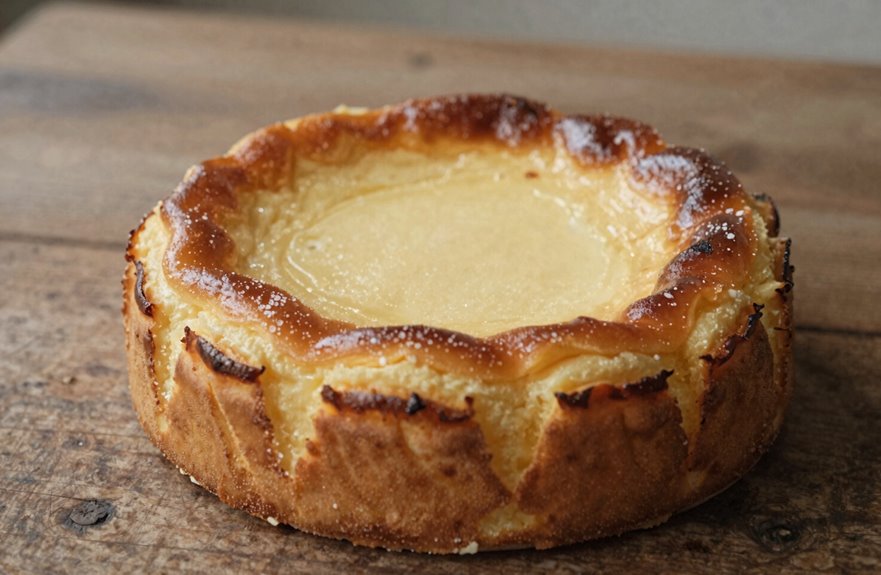
How exactly does a single cake manage to stand out in a world of towering layer cakes and buttercream roses?
Gateau Basque succeeds by breaking all the fancy rules we’re used to. You won’t find fragile sponge layers here. Instead, we’ve got something far more satisfying.
- The crust doubles as both base and lid, like a sweet cookie sandwich
- The filling gets sealed inside, hidden like a delicious secret
- Its shortbread dough creates that tall, compact shape
- Vanilla pastry cream chills before baking, which produces superior results
- A simple dusting of sugar beats frosting every time
This cake represents a Basque tradition treasured by generations of bakers.
How Do French and German Layered Cakes Compare?
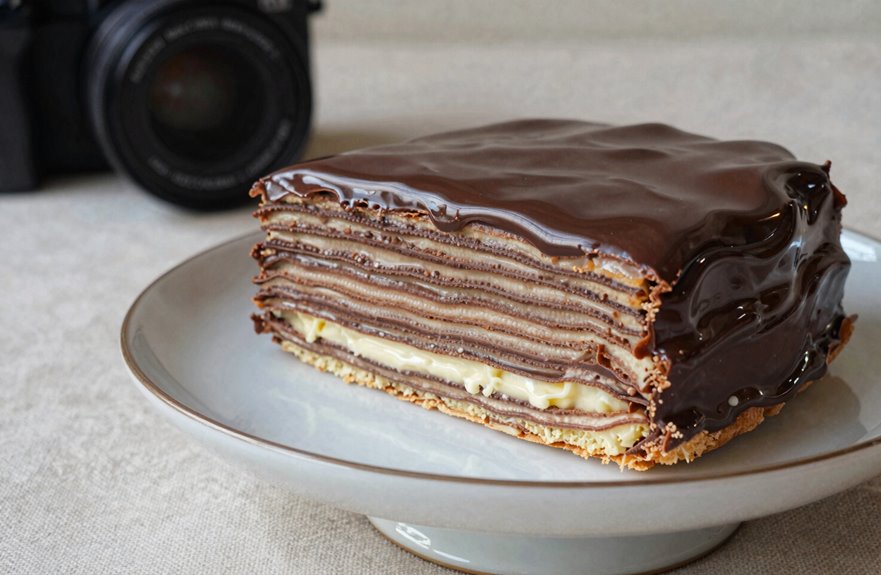
When I first started baking, I assumed all fancy European cakes were basically the same: layers, cream, and hope.
When I first started baking, I assumed all fancy European cakes were basically the same: layers, cream, and hope.
I’ve since learned that French gateau and German tortes tell entirely different stories. A gateau, to me, feels like a celebration of what’s inside: rich ganache, silky mousse, or fruit-studded cream between lighter sponge layers, often left partially exposed so you can see the beauty within. It’s indulgent, perishable, and meant for same-day sharing.
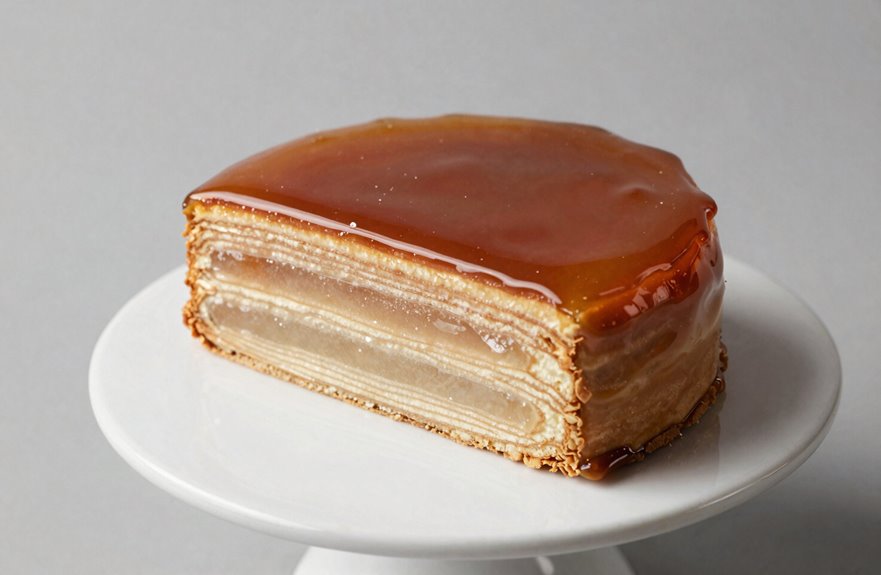
Tortes, though, are architectural marvels. I’m talking ten, twelve, sometimes more whisper-thin layers, often with nuts ground right into the sponge, stacked with precision and finished with glossy glaze or fondant. The Dobos Torte, with its caramel-topped rigidity, differs fundamentally from a fluffy Black Forest gateau.
Both reward patience, but they ask different things of us bakers.
What Techniques Do You Need to Bake Gateau at Home?
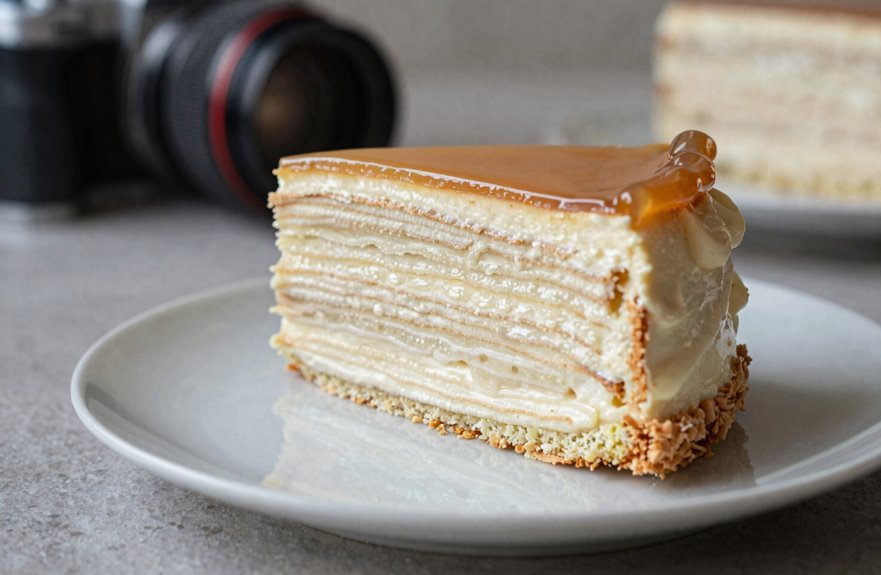
Baking a gateau at home requires patience and a few solid techniques learned through trial and error. Beating eggs properly, really getting them airy, makes all the difference since you’re skipping chemical leaveners. The layers matter too; each one needs careful attention.
Here’s what to focus on:
- Whipping whole eggs or yolks until they’re pale and tripled in volume for proper lift
- Making silky pastry cream that holds its shape when cooled, with no lumps
- Building thin, even sponge layers trimmed with a serrated knife for clean edges
- Assembling in a springform pan to prevent shifting during construction
- Chilling between steps, since rushing compromises the structure you need
How Should You Serve and Store Gateau?
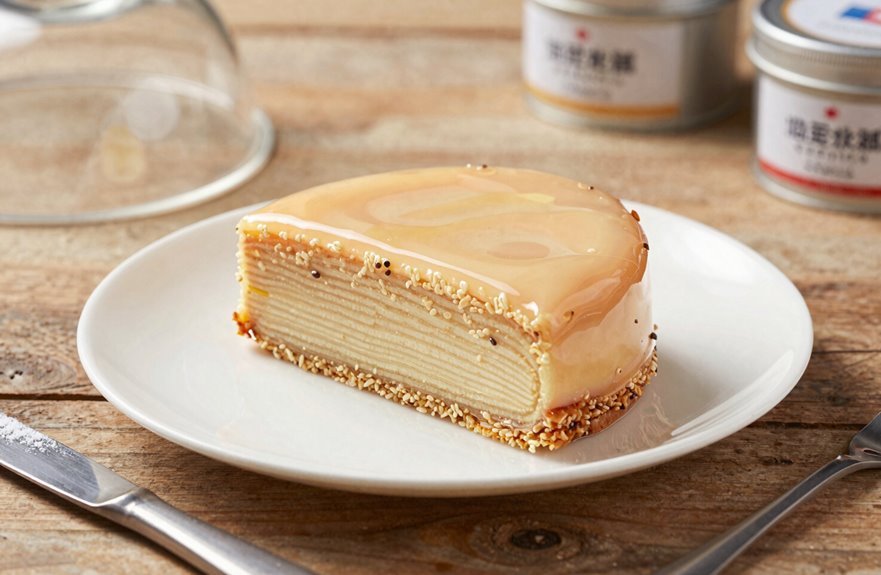
So you’ve finally built this beautiful, towering gateau. I always chill mine first, letting that layering of pastry cream and sponge set for 30–60 minutes between filled additions. When it’s time to serve, I slice carefully, revealing those distinct layers of sponge, cream, and fruit inside. This reveals the architectural structure of the cake.
For Gateau Basque, I bake in a springform, chill the crust and filling in stages, then dust with confectioners’ sugar right before bringing it to the table. No heavy frosting here, just that elegant crown.
If I’m prepping ahead, I reseal and refrigerate portions immediately. These rich cakes spoil fast, so storage conditions directly affect flavor and texture quality.