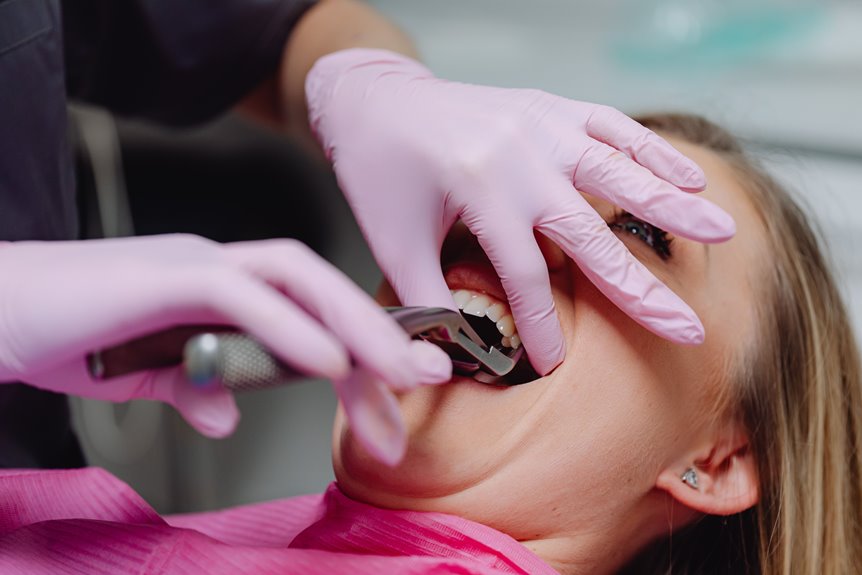
I waited a full 48 hours after my wisdom teeth came out before I even looked at cake, and that patience prevented complications.
You’ll want to start with something soft and simple: sponge cake, angel food, or a moist butter cake at room temperature or slightly chilled, nothing hot.
Cut it into tiny pieces, chew on the side away from your extraction sites, and rinse afterward with warm salt water, half a teaspoon in eight ounces, just as recommended by dental professionals.
Skip the nuts, caramel, and crunchy toppings entirely, and avoid straws; that suction can compromise your healing clot.
If you’re craving something sweet sooner, pudding or applesauce is your safer bet.
Additional guidance on navigating flavors and textures without derailing recovery is available.
Can You Eat Cake After Wisdom Teeth Removal?
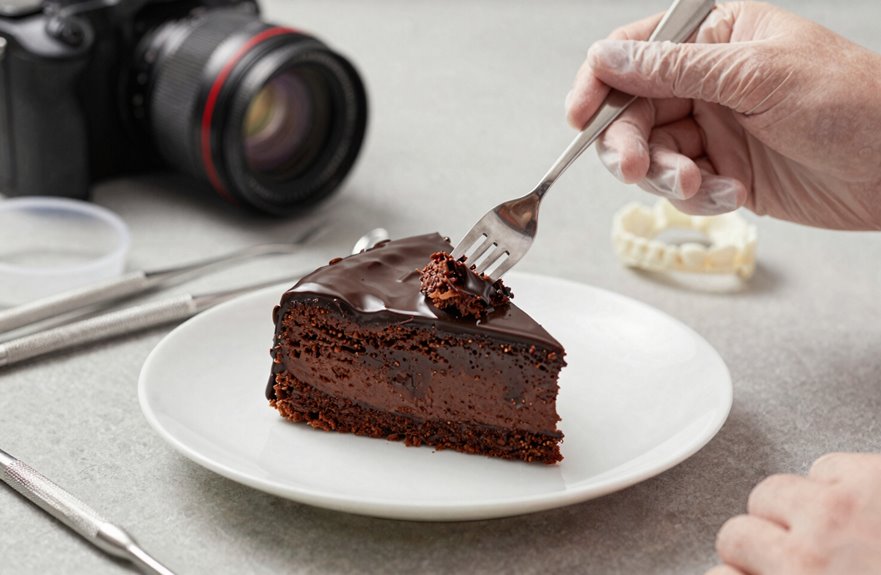
So, you’re wondering if cake is on the menu after getting your wisdom teeth removed. I understand the craving for something that doesn’t taste like mashed potatoes.
Cake safety really depends on picking the right texture and types of cake. Soft foods are essential during recovery. Consider sponge cake, angel food, or a gentle pound cake; anything moist and fluffy works well. Skip the crunchy stuff. No nuts, no coconut, no caramel that will tug at your stitches.
Following healing guidelines is critical. Stick to cold or room-temperature pieces, cut tiny, and chew away from the extraction sites. Recovery takes time, but careful food choices support proper healing.
When Can You Eat Cake After Wisdom Teeth Removal?
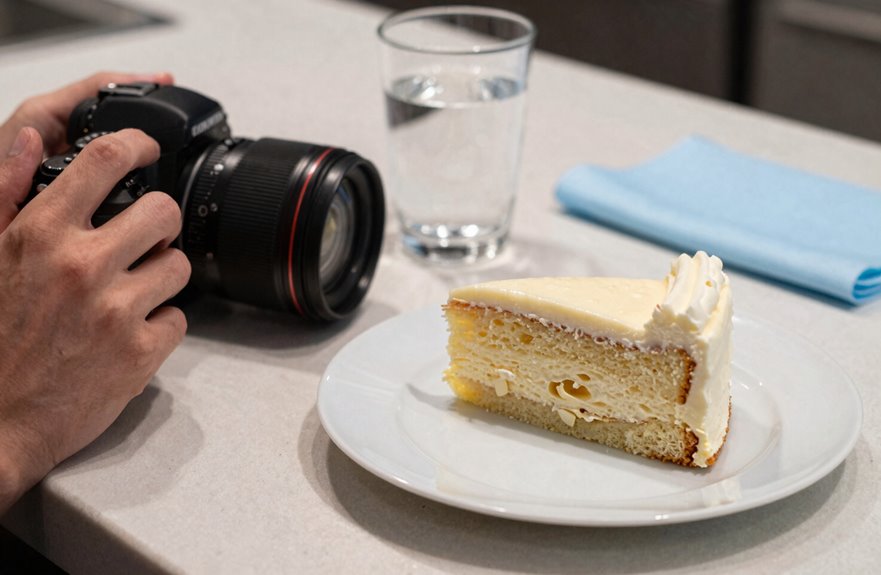
When exactly can I finally sink my teeth, or gently place them, into cake after surgery? I’ve been there, staring at leftover birthday cake, wondering if I’m pushing my luck. After wisdom teeth removal, patience pays off.
Here’s what I’ve learned about timing:
- Wait 24–48 hours minimum before any cake attempts
- Start with soft foods like sponge or angel food cake only
- Keep it cold or room-temperature to protect healing gums
- Cut tiny pieces, chew opposite the extraction sites
- Skip straws entirely, then rinse gently with warm salt water
I know waiting feels impossible when everyone’s celebrating around you. But rushing risks dry socket, and nobody wants that setback. Eating cake too soon can cause serious complications that delay your recovery by weeks. That first bite will taste sweeter when your extraction sites have properly closed.
Which Cake Types Work After Wisdom Teeth Removal?
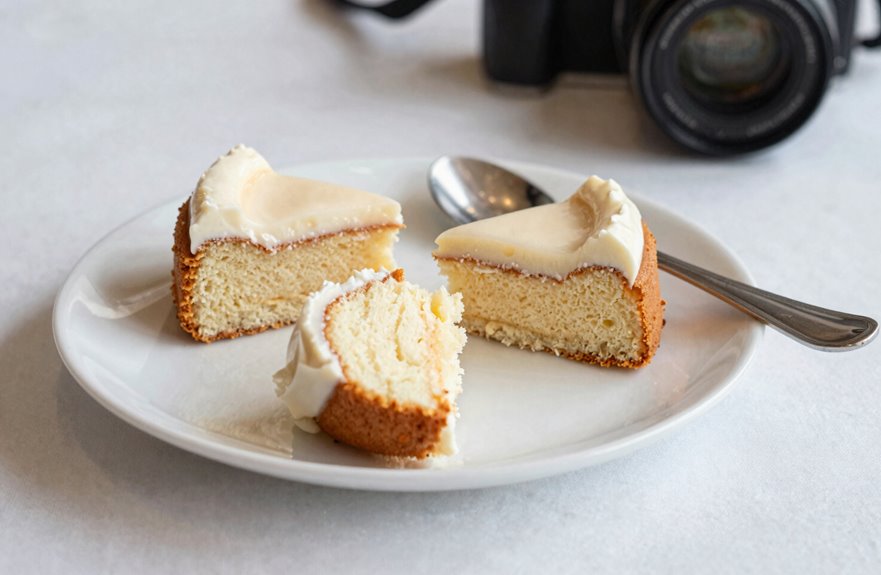
What kind of cake can you actually eat without wrecking your healing mouth. Soft cake makes all the difference. Think sponge, chiffon, or moist butter cake. These gentle textures won’t fight back when you chew.
Let your slice sit until it’s room-temperature, since cold shock can sting those tender spots. You’ll want to avoid sticky situations entirely. No caramel, toffee, or gummy fillings that cling and pull. These choices create unnecessary complications during recovery.
Cake types that work:
| Cake Type | Why It Works |
|---|---|
| Angel food cake | Ultra-soft, practically melts |
| Sponge cake | Light, airy, minimal chewing |
| Chiffon cake | Moist, tender crumb |
| Moist butter cake | Dense but gentle |
Cut small portions and chew opposite your extraction sites for optimal healing and comfort.
Cakes to Avoid After Wisdom Teeth Removal
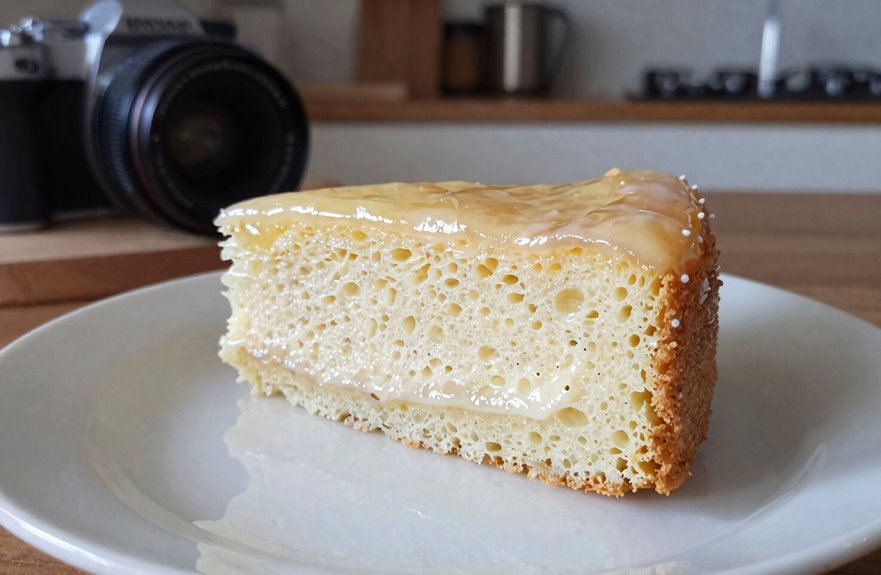
Knowing which cakes work is only half the battle. I’ve got to warn you about the ones that’ll betray your healing extraction sites when you’re craving something sweet.
Here’s what to avoid:
- Nuts, seeds, and coconut – These textures lodge right where you don’t want them
- Crunchy toppings and sugar crystals – Crunchy toppings scrape and irritate the extraction sites
- Caramel, toffee, or gummy fillings – They pull and tug, increasing your chewing stress
- Firm cheesecake crusts – Too much resistance when you need soft cakes only right now
- Hard-frozen ice cream cake layers – Brittle cold causes pain during healing
Stick with soft cakes, moist and gentle, while you’re healing. Your mouth needs that care.
Sweet Foods Safer Than Cake Right After Surgery
Why rush straight to cake when your mouth’s still figuring things out? I’ve learned, the hard way, that smart diversions like pudding, applesauce, and yogurt keep my sweet tooth happy without risking my healing sites. These options need zero chewing, unlike even the softest angel food cake I’d crave on day two.
Waiting 24–48 hours before introducing cake isn’t punishment; it’s protection. Cold smoothies cause zero irritation. Room-temperature custard provides comfort without compromise. I’ve skipped the sugar rush too, swapping frosting for blended banana “nice cream,” because bacteria thrive in recovery environments and I wasn’t inviting that risk.
You belong here, whether you’re team pudding-first or counting hours until that first bite. Your timeline matters. I started slow, building trust with my body, and you can do the same.
How to Prepare Cake for Safe Eating After Extraction
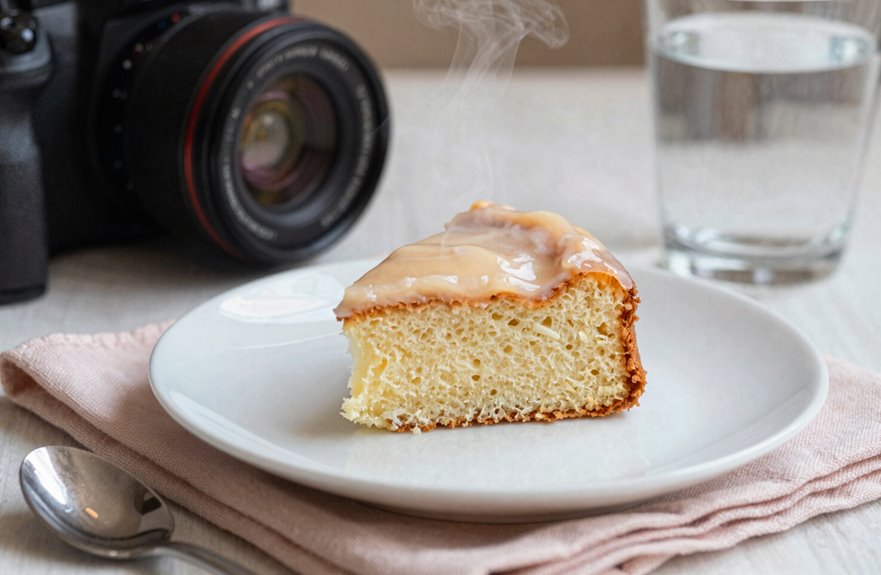
When can I finally dig into cake again? I’ve been there, staring at leftover birthday cake, wondering if I’m pushing it too soon. Here’s how to prep it safely:
- Pick soft cake types, like sponge or chiffon, skipping anything with nuts or crusty edges that could scrape healing gums
- Ensure it’s room-temperature, never warm, since heat increases blood flow and irritation
- Cut tiny pieces, taking small bites to keep the jaw relaxed and avoid pressure on extraction sites
- Skip sticky frosting that might tug at clots, opting for smooth, gentle toppings instead
- Wait 24-48 hours minimum, then rinse with warm salt water afterward to keep things clean
Cake is worth the wait during recovery.
How to Chew Cake Without Harming Extraction Sites
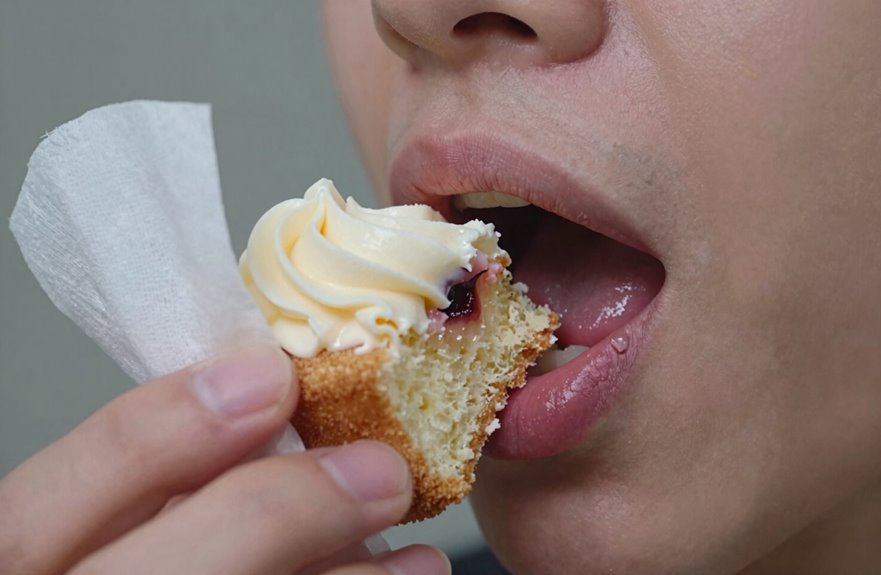
So how exactly do you chew without wrecking everything the dentist just fixed? The trick is all in where and how you chew.
First, I cut my cake into tiny pieces, like pea-sized pieces. Then I chew carefully, keeping everything on the opposite side from my extraction sites. No wandering food particles allowed near those healing spots.
I stick to soft foods, especially sponge or chiffon cakes, because they’re gentle on sensitive wisdom teeth holes. No nuts, no crunchy surprises. And I skip the straw since suction can disrupt healing. Afterward, I rinse with warm salt water, starting day two. Careful chewing promotes proper healing one bite at a time.
What Cake Temperature Is Safest After Surgery?
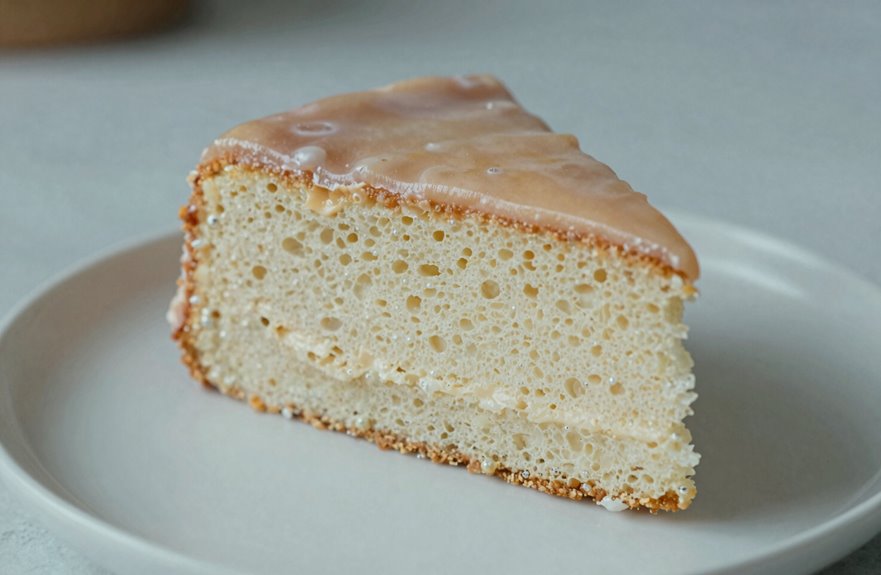
How exactly should your cake feel when it hits your healing gums? I’ve wondered this too, and here’s what I’ve learned about finding that sweet spot.
- Cold cake, straight from the fridge, or even with a little ice cream alongside, feels soothing when you’re swollen.
- A soft, room-temperature slice works well if cold sounds unappealing right now, and that’s completely valid.
- Warm cake should be avoided. Hot food irritates tender spots and slows healing.
- Temperature matters less than texture. Check that your piece stays soft and moist.
- Skip anything that needs real chewing; no sticky corners or chewy edges near extraction sites.
You do what’s comfortable for your mouth. Everyone heals a little differently.
How Much Cake Can You Eat After Wisdom Teeth Removal?
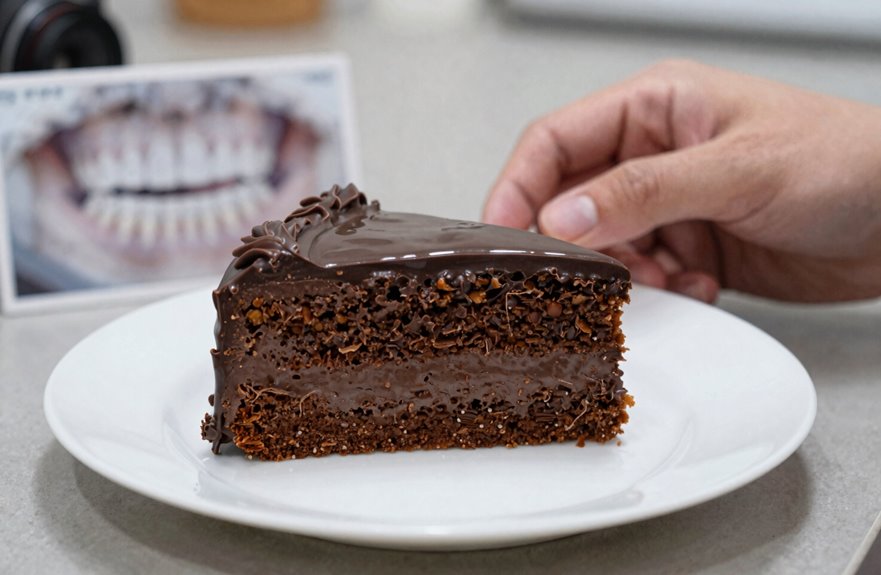
Now that I’ve got the temperature part figured out, I’m wondering about something else I didn’t think to ask my oral surgeon: how much cake is actually okay.
Soft foods are your best friend right now, and post-op timing really matters. I’m waiting at least 24–48 hours before my first bite, because blood clot protection isn’t something I’m messing with. When I finally dig in, I’m keeping it tiny, maybe a two-inch square, max. The cake texture has to be super gentle, like sponge or angel food, nothing with nuts or sticky frosting that’ll tug at my stitches. I cut it into little pieces, chew on the opposite side, and stop before I’m full. One modest slice represents reasonable progress during recovery.
How to Rinse After Eating Cake
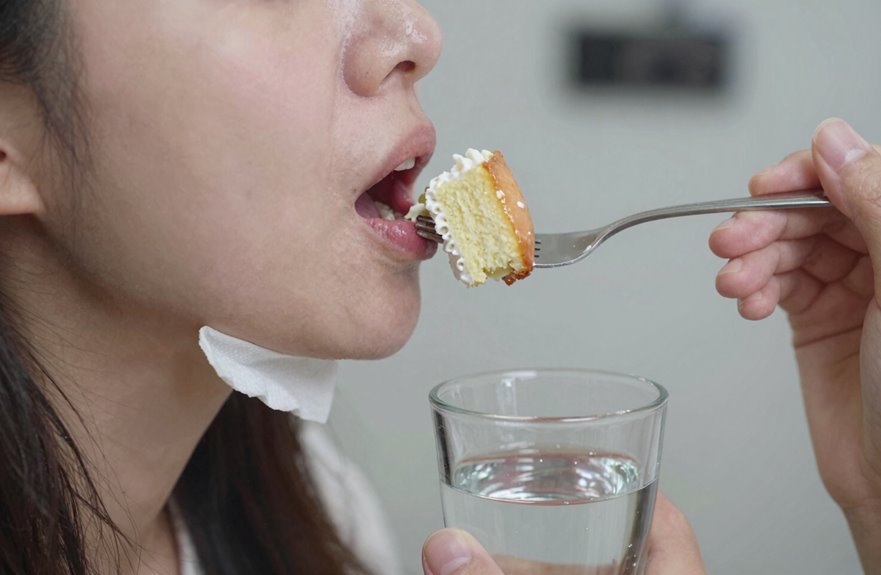
A gentle rinse is the quiet reward my mouth gets after eating cake. After wisdom teeth removal, I waited that first full day before rinsing, as patience is part of good post-op care.
My simple routine:
- I mix ½ teaspoon salt into 8 oz warm water, not hot
- I rinse gently, no vigorous swishing, starting after 24 hours
- I repeat this salt water rinse 3–4 times daily, especially after eating cake
- I skip straws completely; suction can disrupt healing
- I keep my tongue soft, brushing carefully around healing spots
This routine supports proper recovery after dental procedures.
Warning Signs You Ate Cake Too Soon
I’ve got my salt water rinse down pat, but I also learned, not the fun way, that timing matters when you’re craving cake post-surgery. When healing is fragile, diving into cake after extraction too early brings real risks.
Watch for warning signs I ignored: throbbing pain that ramps up around day three, weird tastes, or funky odors nobody warned me about. That indicates dry socket, which causes significant discomfort. If your jaw is getting crankier or you’re spotting blood in your saliva post-bite, your extraction site needs more time to heal.
Crunchy nuts or sticky frosting present problems. I thought I was being careful, but those textures cause trouble. My dentist said increased swelling or fever means you should stop eating cake and call the office. Pay attention to what your mouth is telling you about when cake can wait.
Why Sugary Cake Slows Healing After Extraction
Why does something as innocent as cake turn into a troublemaker when your gums are trying to heal? Sugar isn’t exactly your friend post-extraction.
What actually happens:
- Sugar feeds bacteria around your wound, inviting infection when you’re most vulnerable
- Healing gets sluggish because sugar triggers gum inflammation that lingers longer than desired
- Sticky cake residue clings to sockets and raises dry socket risk
- Your body works overtime fighting inflammation instead of rebuilding tissue
- The sweet rush comes with a delayed recovery cost
Choosing lower-sugar options or soft, room-temperature slices keeps you in the clear. Your gums will heal faster without the inflammatory response that sugar causes.
Mistakes That Cause Dry Socket From Cake
How exactly do you turn a simple slice of cake into a one-way ticket to dry socket hell? I’ve watched friends, and yes, myself, make every classic mistake. You grab a straw for that milkshake pairing? That’s a significant problem. That suction pulls clots right out, exposing bone and nerves to dry socket misery.
Then there’s the texture trap. Caramel drips, nut chunks, chewy fondant stick, tug, and disturb your extraction site like tiny wrecking balls. I’ve seen people chew on the tender side, too, thinking they’re being careful. You’re just asking for trouble.
Slurping cake when you’re still numb creates suction you can’t even feel. And spitting out crumbs aggressively disturbs the healing process. Stick to soft foods, tiny bites, and let the cake practically melt. Your mouth is healing, so avoid rushing the recovery.
When Normal Cake Eating Resumes After Surgery
I’ve found that getting back to cake after surgery isn’t as simple as counting down the days. I learned that the hard way when I tried a brownie too early and spent an hour regretting it. Once you’ve hit that 24 to 48 hour mark, your mouth’s still pretty touchy, so I stick to soft, cloud-like sponge cakes (the kind that practically melts on your tongue) and keep things at room temperature or slightly chilled since hot foods make my gums cranky. I’ll show you my go-to timeline, the safest cakes I’ve actually tested, and the chewing tricks that keep me out of trouble because nobody wants to explain a dry socket to their dentist when cake was involved.
Healing Timeline Overview
When exactly can you dig into cake again? I get it, you’re craving something sweet, and we’re in this together.
Your healing timeline moves at its own pace. What I’ve learned about soft foods and getting back to normal:
- Wait 24–48 hours minimum, because rushing risks more than it’s worth
- Choose cake texture that’s super soft, moist, and free of crunchy bits. Your gums will benefit from this choice
- Keep it cold or room-temp; hot cake irritates everything
- Start tiny, maybe a bite or two, gauging comfort before going bigger
- Skip sticky, chewy stuff entirely to avoid complications
Full healing takes 1–4 weeks, so let pain guide your choices. You’ll know when regular textures feel right by paying attention to your body’s signals.
Safe Cake Types
So what kind of cake actually makes the cut after surgery. I wait at least 24–48 hours first, then I grab soft cakes with gentle texture. Think sponge, chiffon, or moist butter cake. Nothing crunchy, no nuts or seeds sneaking in there. I keep it cold or room temperature, because hot stuff irritates my healing gums. I skip sticky icing or chewy fillings entirely; they cling where they shouldn’t. When I finally dig in, I cut tiny pieces, minimizing chewing pressure near my sore spots. It’s not the same as diving in fork-first, but soft cakes allow gradual recovery while still enjoying dessert. A gentle rinse with warm salt water after completes the process.
Proper Eating Technique
Although I was dying to tear into a slice the moment I got home, I knew rushing it would backfire spectacularly, so I waited.
Here’s how I eased back into cake heaven:
- I held off 24–48 hours, letting those clots settle
- I picked soft foods like sponge cake, skipping nuts and sticky frostings
- I cut tiny bites, using gentle chewing on the side opposite my healing gums
- I skipped straws entirely. Suction compromises healing.
- I rinsed with warm salt water after, stopping if anything felt weird
Avoid straws, chew slowly, and remember that waiting allows proper healing. That first real bite becomes worth the delay.
Cake-Specific Questions to Ask Your Dentist
How soon can I reasonably ask my dentist about cake without sounding completely ridiculous? Bring it up during your first post-operative care check-in. Dentists encounter a wide range of questions on this topic.
When I went, I asked about soft foods timelines, specifically when cake texture wouldn’t interfere with my healing. My dentist told me wisdom teeth recovery varies, so the relevant questions are: “Can I try soft sponge cake at 48 hours?” and “Should I avoid certain frostings?”
I also wanted to know if room-temperature cake was preferable to warm cake, and whether tiny pieces mattered more than larger bites. The answer is yes; portion size does affect healing.
Getting personalized approval from your dentist beats guessing. Your dentist wants you back to normal eating too. There is no reason to hesitate asking about foods you’re wondering about.